
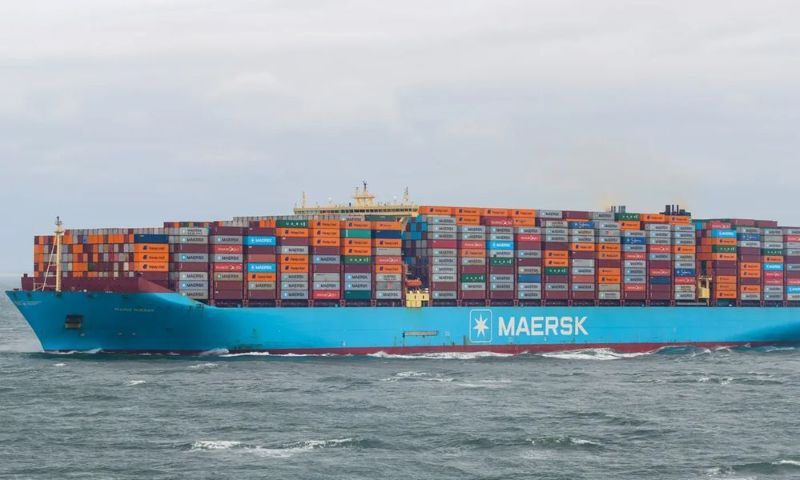
A.P. Moller – Maersk has decided to implement the first structural return of a container service to the trans-Suez route for its MECL service after the successful transits of the Maersk Sebarok and the Maersk Denver, according to the company’s statement.
The decision allows the MECL service to revert to its originally designed routing, aimed at providing more efficient transit times for customers, while the company states that safety remains the top priority.
The MECL service is solely operated by Maersk and connects the Middle East and India with the US East Coast. Maersk said it will continue to closely monitor the security situation in the Middle East, noting that any changes to the MECL service depend on sustained stability in the Red Sea and the absence of escalation in regional conflicts.
The company stated that contingency plans are in place should conditions deteriorate, which could require reverting individual MECL sailings or the broader service back to the Cape of Good Hope route.
The structural change of the MECL service marks a milestone in its gradual resumption of trans-Suez sailings and that planning has involved cooperation with the Suez Canal Authority and other regional partners to support operational safety and predictability for customers.
The first westbound sailing under the revised MECL routing will be the Cornelia Maersk, voyage 603W, departing Jebel Ali on 15 January 2026. The first eastbound sailing via the trans-Suez route will be the Maersk Detroit, voyage 602E, departing North Charleston on 10 January 2026, with subsequent sailings following the same routing.
A.P. Moller – Maersk is a Danish multinational group operating as an integrated logistics provider, offering ocean transport, port services and supply chain solutions across multiple regions. The group conducts operations in more than 130 countries and employs approximately 100,000 people.
The Suez Canal Authority is an Egyptian state body responsible for the administration, operation and maintenance of the Suez Canal, including vessel traffic management, infrastructure development and coordination with international shipping operators.