
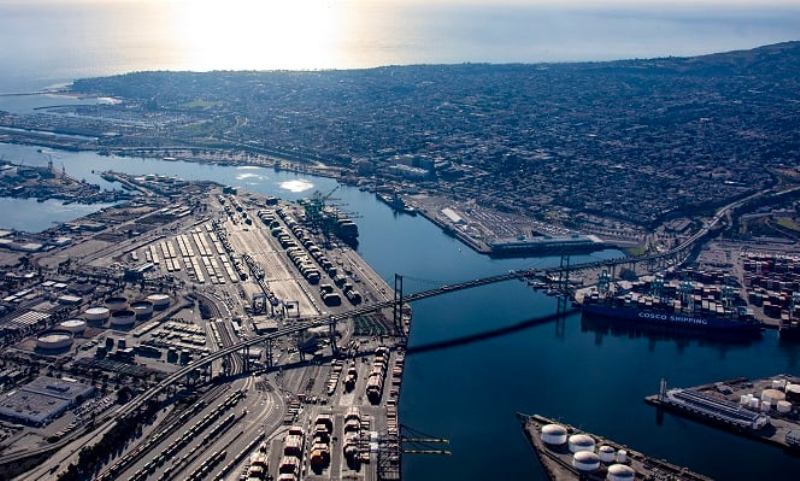
The Port of Los Angeles handled more than 10.2 million TEUs of containerised cargo in 2025, underlining its position as the busiest container port in the United States despite ongoing volatility in global trade. The strong throughput reflected resilient consumer demand, steady import flows, and continued recovery in trans-Pacific shipping volumes.
Port officials said import cargo, particularly consumer goods, electronics and furniture, supported overall volumes, while exports also showed signs of stabilisation after a period of weakness. Improvements in terminal productivity, extended gate hours, and better coordination with rail and trucking partners helped the port manage higher volumes efficiently through the year.
The port continued to invest in infrastructure and technology during 2025, including terminal modernisation, digitalisation initiatives, and emissions-reduction projects. These efforts were aimed at easing congestion, improving supply chain reliability, and advancing the port’s goal of transitioning to zero-emissions operations.
Industry analysts noted that crossing the 10.2 million TEU mark highlights the Port of Los Angeles’s resilience amid shifting trade patterns, geopolitical uncertainty, and evolving supply chains. Looking ahead, port authorities said maintaining competitiveness will depend on continued investment, labour stability, and adapting to changes in global shipping and logistics dynamics.