
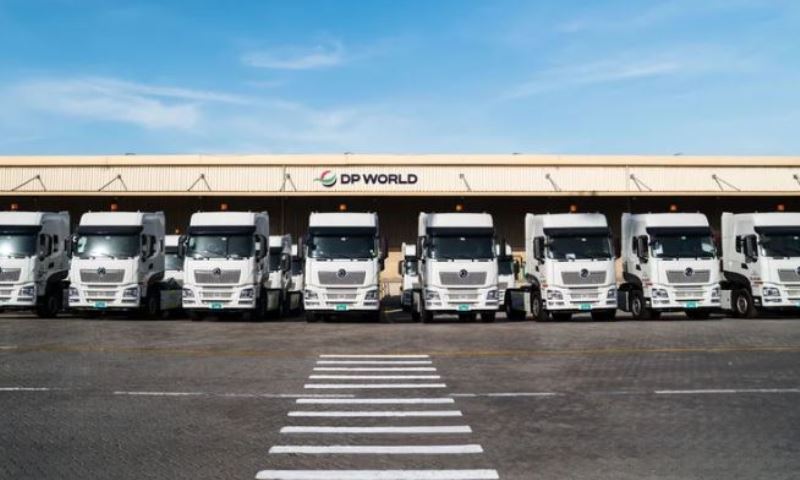
DP World is expanding its road freight network across the Gulf as disruption around the Strait of Hormuz pushes cargo owners and shipping lines to seek alternative routes.
The ports and logistics group has added 700 trucks to its GCC fleet, increasing its ability to handle domestic and cross-border cargo movements. The additional vehicles can support up to 35,000 truck trips a month, complementing a network that already handles around 3,000 truck movements a day.
The trucking expansion forms part of DP World’s broader multimodal strategy to keep cargo moving when maritime routes face disruption. Since March, the company has moved 500,000 TEUs across its GCC road and rail network, providing customers with alternatives to conventional sea routes.
DP World has also established bonded corridors linking Oman and the UAE and developed fast-track routes connecting eastern gateways with Jebel Ali Port. It has used overland connections through the region and Red Sea routing via Jeddah to maintain cargo flows during maritime disruptions.
The company said the additional trucks will support first-, middle- and last-mile requirements for both containerised and non-containerised cargo. The vehicles meet Euro V emissions standards, while DP World plans to explore the use of lower-emission and green-energy vehicles in the future.
The strategy reflects a wider shift towards multimodal logistics as companies seek to reduce dependence on vulnerable maritime chokepoints. Traffic through the Strait of Hormuz has slowed amid continuing regional security tensions, increasing pressure on Gulf supply chains.
For DP World, the expanded trucking capacity strengthens its ability to offer customers alternative port-to-door routes and greater flexibility during periods of geopolitical and maritime disruption.