
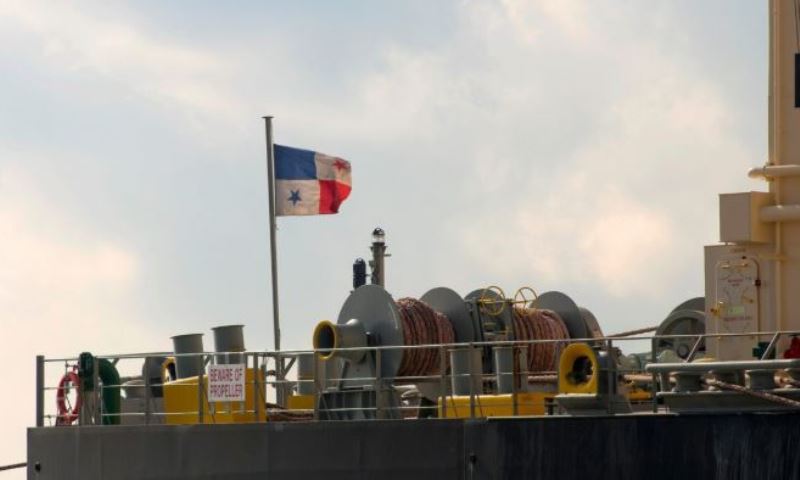
Panama has announced a significant reduction in the number of Panamanian-flagged vessels detained for inspections at Chinese ports following a maritime agreement reached between the two countries.
According to the Panamanian government, detentions of Panama-flagged ships in Chinese ports have dropped dramatically from 140 cases in May to just 16 so far in July, marking what officials described as the first tangible outcome of recent bilateral negotiations.
In an official statement, the government said that discussions between Panamanian and Chinese authorities had produced positive results, leading to a substantial decrease in inspection-related detentions.
Earlier this week, Panama’s Ministry of Foreign Affairs confirmed that following negotiations held in Beijing earlier this month, both countries had reached a consensus to move forward with the renewal of their maritime cooperation agreement, which provides operational advantages for Panama-flagged vessels at Chinese ports.
The increased inspections had followed a Panamanian court ruling that cancelled the concession held by Panama Ports Company, a subsidiary of Hong Kong-based CK Hutchison, to operate two terminals at the Panama Canal.
The issue also gained international attention after U.S. President Donald Trump reiterated his intention to assert greater U.S. influence over the strategically important Panama Canal, claiming it had been effectively controlled by China. However, the Panama Canal continues to be administered by the autonomous Panama Canal Authority, independent of the Panamanian government.
The latest agreement is expected to improve operational efficiency for the world’s largest ship registry, with Panama seeking to ensure smoother port access for its extensive merchant fleet while strengthening maritime cooperation with China.