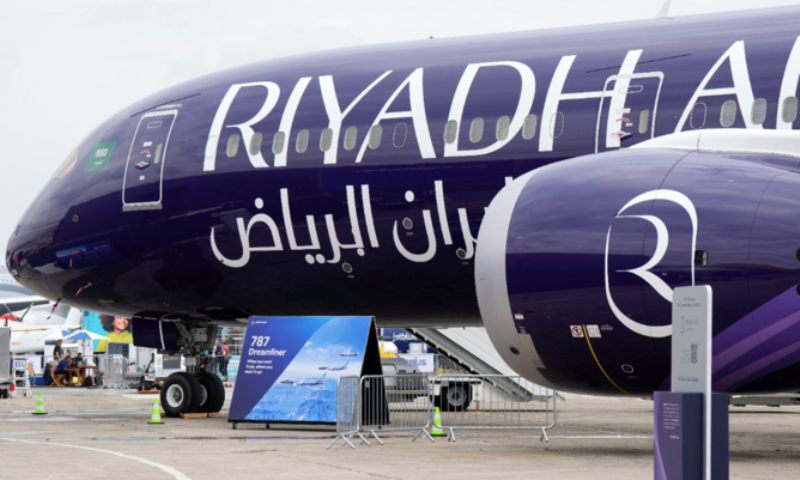
Riyadh Air, Saudi Arabia’s new national carrier, has announced the launch of its cargo division under the brand Riyadh Cargo, marking its formal entry into the global air freight market and the activation of belly-hold cargo operations across its wide-body fleet.
Riyadh Cargo will leverage capacity from Riyadh Air’s more than 120 wide-body aircraft currently on order, enabling the efficient and reliable movement of goods across international markets. The cargo business is being developed through a phased and scalable approach, anchored at the airline’s Riyadh hub and aligned with the carrier’s expanding network and operational maturity.
Having recently commenced operations as part of Riyadh Air’s broader Pathway to Perfect process, Riyadh Cargo has already demonstrated strong operational momentum on the Riyadh–London Heathrow route. The service has successfully carried a diverse range of commodities, including garments and textiles, fresh flowers, seafood, tea, and coffee, underlining its capability to handle time-sensitive, perishable, and high-value shipments.
Digitalisation is central to Riyadh Cargo’s operating model. The airline has implemented dedicated cargo management systems, centralised airwaybill control, and enhanced data-visibility tools to improve transparency, speed up decision-making, and maintain consistent service standards. Round-the-clock access to airwaybill stock management provides an added operational advantage.
In line with its digital-native strategy, Riyadh Cargo has partnered with CHAMP Cargosystems to deploy Cargospot-neo, a next-generation, end-to-end cargo platform that enhances operational control, data visibility, and service reliability as volumes and network complexity grow.
Cargo operations are further supported by a strategic investment in digitally tracked unit load devices (ULDs). Working with Unilode, Riyadh Air will manage lightweight and durable ULDs with real-time tracking, improving asset visibility, stock optimisation, and operational efficiency, particularly during irregular operations.
On the ground, cargo handling and hub management are delivered in partnership with SATS Saudi Arabia Company at key airports across the Kingdom, including King Khalid International Airport (Riyadh), King Fahd International Airport (Dammam), and King Abdulaziz International Airport (Jeddah). These stations are equipped with modern infrastructure, specialised handling zones, and centralised hub management to ensure seamless cargo connections.
As Riyadh Air progresses with its growth plans—operating more than 180 aircraft and serving over 100 destinations by 2030—the airline is expected to contribute around USD 20 billion to Saudi Arabia’s non-oil GDP and support more than 200,000 direct and indirect jobs globally. Riyadh Cargo is positioned as a key enabler of this expansion, reinforcing the Kingdom’s ambition to become a leading global aviation and logistics hub.
