
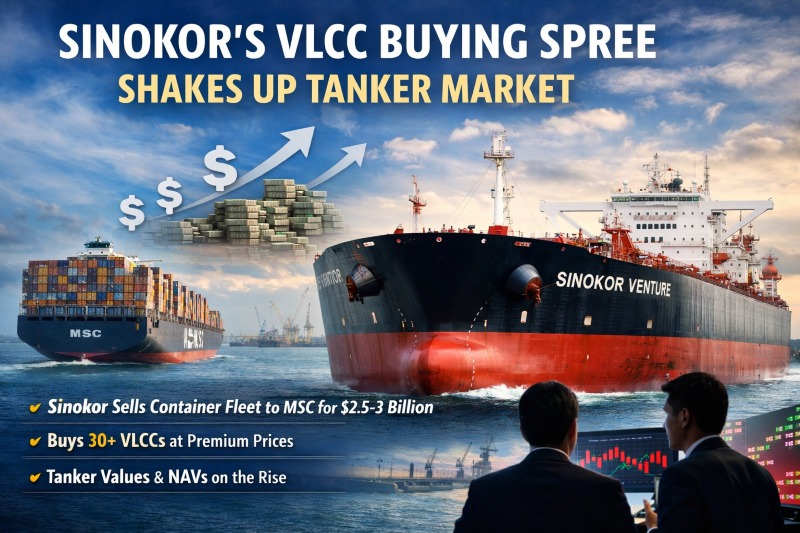
A decisive strategic pivot by South Korean shipping major Sinokor is sending ripples through the global sale-and-purchase (S&P) market, as the company redeploys capital from container shipping into very large crude carriers (VLCCs).
Market participants say Sinokor has largely exited the container sector and is aggressively building a crude tanker portfolio, paying premium prices to secure available VLCC tonnage. The move has caught brokers by surprise, with one describing the owner as “trying to buy as many VLCCs as it can get its hands on.”
Oslo-based Gersemi Asset Management has directly linked Sinokor’s tanker buying spree to what it describes as a massive container cash-out. According to market talk cited by Gersemi, Sinokor is believed to have sold its entire containership fleet to MSC in a deal valued at around $2.5bn to $3bn, freeing up significant capital now being channelled into crude shipping.
In its latest weekly report, Gibson Shipbrokers estimated that Sinokor may have already tied up around 30 VLCCs, acquiring vessels from owners including Frontline, Dynacom, and CMB.Tech, Chandris, Capital, Advantage and Cardiff, with further transactions expected to emerge.
Gibson noted that while 15-year-old VLCCs were typically valued at about $59m to $60m in December, Sinokor has been willing to pay 10% to 15% above prevailing market levels to secure tonnage quickly and lock in sellers. The buying programme has reportedly also included a series of time-charter extensions and new fixtures with major owners.
The broker added that several sellers are now expected to recycle proceeds into newbuilding orders at Asian shipyards, potentially stimulating fresh activity on the contracting side.
The knock-on effects are already being felt across the wider tanker market. Gersemi and other industry participants have raised their generic valuations for oil tankers—particularly VLCCs—boosting net asset values (NAVs) and providing support to tanker-related share prices.
With Sinokor’s pivot still unfolding, market observers expect continued volatility in VLCC pricing and a reassessment of asset values as capital shifts decisively from containers to crude.