
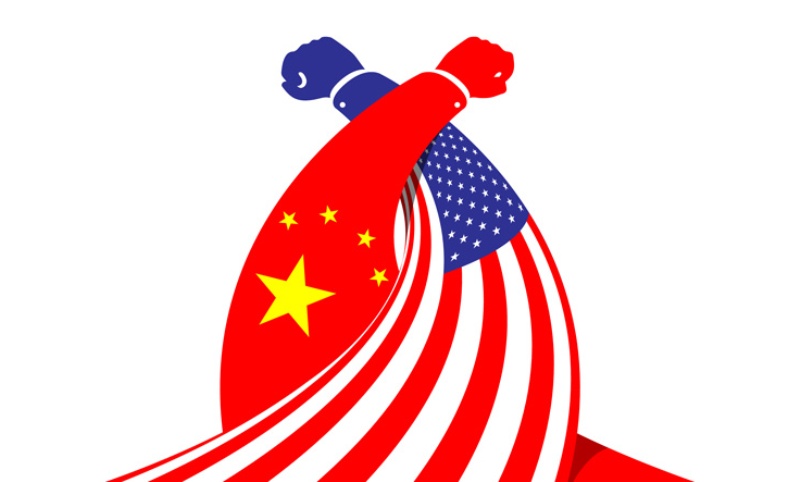
The Chinese government’s aim to develop Asian rail networks could be aided by president-elect Trump’s tariff policy, “running counter to the US’s strategic aims”, according to the founder of Transport Intelligence (Ti), John Manners-Bell.
He said the Chinese government had been “re-focusing its trade strategy for over a decade”, and one of the ways it aimed to increase its influence across the world was “by way of the Belt & Road Initiative”.
He noted that while the priority of the governments involved in the development of a rail network through South-east Asia was to expedite the movement of passengers, it would also create a “huge capacity for freight”.
Indeed, Ti noted, the first part of the Laos-China railway opened in 2021 and, by 2023, was transporting 4.22 million tons of freight, according to a data.
The Pan-Asia Railway comprises three routes linking Kunming in China to Singapore via Myanmar, Thailand, Laos, Vietnam, Cambodia and Malaysia, while a further service, the ASEAN Cargo Express, involves a 14-day trip from Kuala Lumpur to Chongqing, operated by Malaysia’s KTMB, transiting Thailand and Laos.
According to Ti, the service will be 30% cheaper than the air cargo equivalent.
Mr Manners-Bell said: “Somewhat ironically, President Trump’s tariff policy may provide additional momentum to the project as a result of Chinese manufacturers off-shoring production to neighbouring countries.
“This dynamic would consolidate China’s influence in the region, which, while bringing jobs and investment, would run counter to the US’s strategic aims,” he added.
However, Mr Manners-Bell suggested that, while there were benefits from economic integration across the region, “political and security issues will make its development less than straightforward”.
For example, he noted that Laos has had to rely on loans from the Chinese government allowing it access to mineral ores, rare earth metals, timber and rubber, and that many South-east Asian governments will start to be wary of Chinese influence.