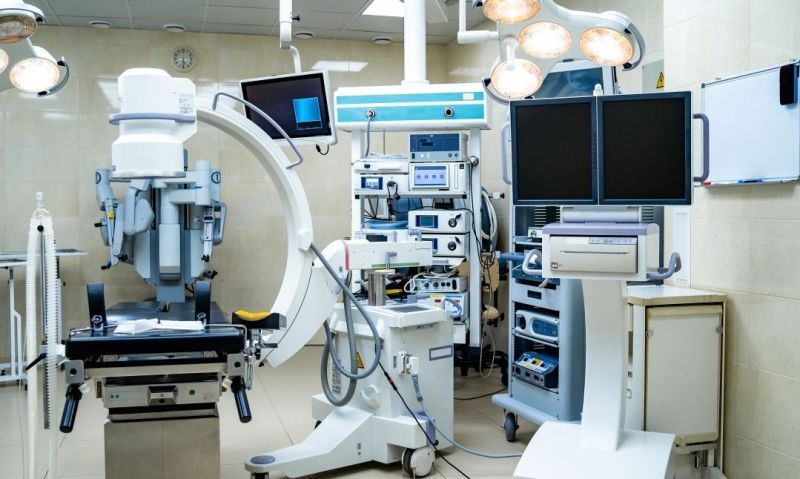
Medical device manufacturers on Friday raised concerns over the import of pre-owned, refurbished high-end and high-value (HEHV) medical equipment like CT scanners, MRI machines, and robotic assistance systems into India, claiming that this move could severely harm the domestic industry, which is still in its nascent stage.
Manufacturing associations added that recent government orders permitting such imports, despite the availability of similar products manufactured in India, threaten the efforts of Indian manufacturers to meet the vision of Aatmanirbhar Bharat.
This response from manufacturers follows an office memorandum (OM) recently issued by the Ministry of Environment, Forest and Climate Change, including a revised list of 38 refurbished HEHV equipment that can be imported into India.
While the new memorandum reduced the number of HEHV equipment permitted for import from 50 to 38, it also removed a mandatory clause that prohibited importing listed equipment already manufactured in India.
Groups have therefore requested Union Health Minister J P Nadda to intervene and rescind the policy.
“We have made representations detailing our investments, manufacturing capabilities, and employment generation, along with lists of installations in India and overseas, to the ministries of health and environment and the department of pharmaceuticals, both directly and through associations,” an industry source stated.
Commenting on the issue, Rajiv Nath, forum coordinator at the Association of India Medical Device Industry (AIMED), said that the OM issued by the environment ministry undermines the National Medical Devices Policy 2023, launched by the Prime Minister last year.
“Not only are many projects recently initiated for high-end medical equipment now jeopardised, but patient safety is also at risk as patients could be treated with non-calibrated, non-regulated medical equipment, compromising safety,” he added.
The groups further stated that reliance on refurbished imports threatens the industry and could harm startups and micro, small, and medium enterprises (MSMEs), potentially leading to the shutdown of manufacturing units.
Industry experts highlight that while the industry has developed devices meeting international quality standards, widely used in both Indian and international healthcare institutions, it is irrational to permit refurbished medical devices to compete with locally manufactured new products.
“As Indian manufacturers invest in research and development, innovating high-tech solutions aligned with the Make in India vision, refurbished imports not only compromise quality of care but also disincentivise investment in homegrown advancements,” said Sudhir Srivastava, past chair of the medical device committee at the PHD Chamber of Commerce and Industry (PHDCCI).
He added that refurbished devices often lack the latest technological advancements and come with lower warranties, inadequate service support, and higher failure rates, all of which can impact treatment quality and surgical outcomes.
This development follows a Public Interest Litigation (PIL) filed by a Delhi-based not-for-profit organisation, the Patient Safety and Access Initiative of India Foundation (PSAIIF), before the Delhi High Court in May this year.
The PIL raised objections regarding the laxity in the regulatory framework concerning the quality, safety, and efficacy of second-hand or used medical devices in India.
