
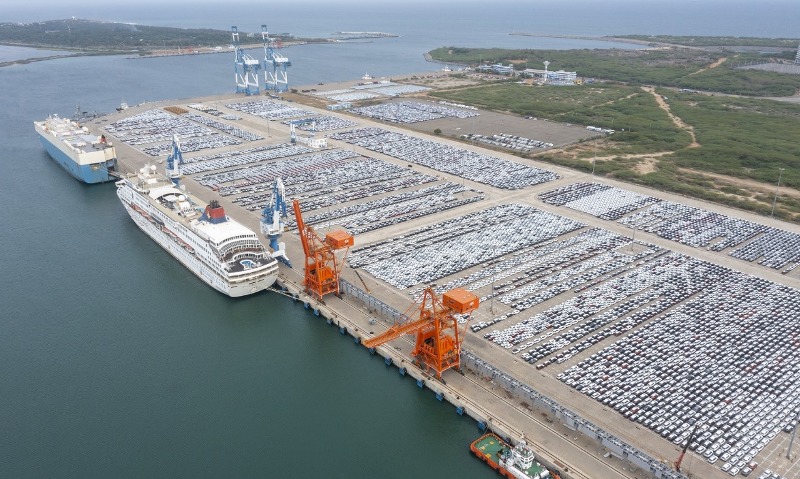
Sri Lanka’s China-backed Hambantota International Port said it was planning to break into the container relay market, which will contribute to the island’s plans to handle 10 million boxes in 2025/2026.
While transshipment involves feeder lines bringing containers from regional ports to a hub port, where mainline ships call, cargo relay involves transferring cargo within ships from the same carrier going on different routes.
“As part of its seaside strategy, the port is entering the relay cargo market, representing a new opportunity for the country…” Hambantota International Port Group said in a statement.
By utilising an intermediate relay port, shipping lines can optimise their routes, streamline operations, and reduce overall transit times, the port said.
Wilson Qu, CEO of Hambantota International Port Group (HIPG), said the port was exploring previously untapped markets to expand its portfolio.
“Hambantota Port’s strategic location on Sri Lanka’s southern coast, combined with the island’s central position along key maritime routes, offers a unique opportunity to attract customers who may not have previously considered Sri Lanka a viable option,” Wilson Qu said.
Hambantota port is now installing new cranes that will allow it to handle up to a million twenty-foot equivalent units a year. It is also planning a feeder operation with Colombo.
HIP also has an industrial port which will also boost its cargo volumes in what it calls its ‘landside’ strategy, as part of efforts to go beyond its geographical location.
There was also more business in transshipment.
More than 70 percent of containerised cargo from the BIMSTEC countries bypasses Sri Lankan ports, presenting a substantial opportunity for HIP to capture a significant portion of this untapped market, HIPG said.