
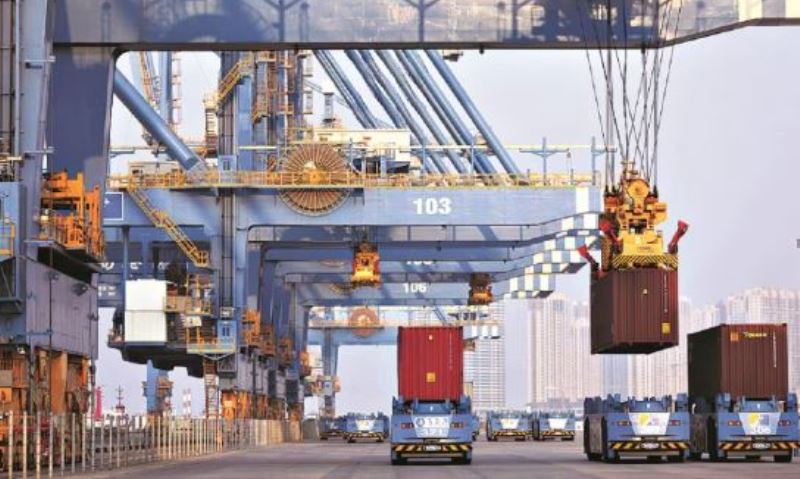
The Chhattisgarh Cabinet approved ‘State Logistics Policy-2025’ which is a comprehensive framework introduced by the government to transform the state into a major logistics and export hub.
The policy aligns with India’s National Logistics Policy and is aimed at reducing logistics costs, boosting industrial competitiveness, and enhancing export capabilities, Deputy Chief Minister Arun Sao said here.
Chhattisgarh’s geographic location — positioned at the heart of India — offers a strategic advantage for interstate and international trade routes.
One of the policy’s key focuses is the development of dry ports and inland container depots to support micro, small, and medium enterprises (MSMEs) and regional producers in reaching domestic and international markets.
This infrastructure will provide seamless connectivity between production zones and distribution channels, reducing transit times and improving the efficiency of supply chains.
The Logistics Policy-2025 leverages this by encouraging investments in multimodal transport infrastructure, warehousing, and digital logistics systems.
National and international logistics players, as well as e-commerce companies, are expected to be drawn to the state through targeted incentives and land facilitation.
The policy also aims to create a robust storage network to assist industries, traders, and farmers.
In turn, this will benefit agricultural and forest-based producers, particularly in forest-rich regions like Bastar and Surguja, by promoting the export of medicinal plants, non-timber forest produce, and tribal handicrafts.
Employment generation is a core outcome of the policy.
By formalising the logistics ecosystem, the state anticipates the creation of thousands of direct and indirect jobs, particularly in transport, warehousing, packaging, and IT-enabled logistics services.
Additionally, the policy promotes sustainability by encouraging fuel-efficient transport, eco-friendly packaging, and digital tracking systems to reduce the state’s environmental footprint.