
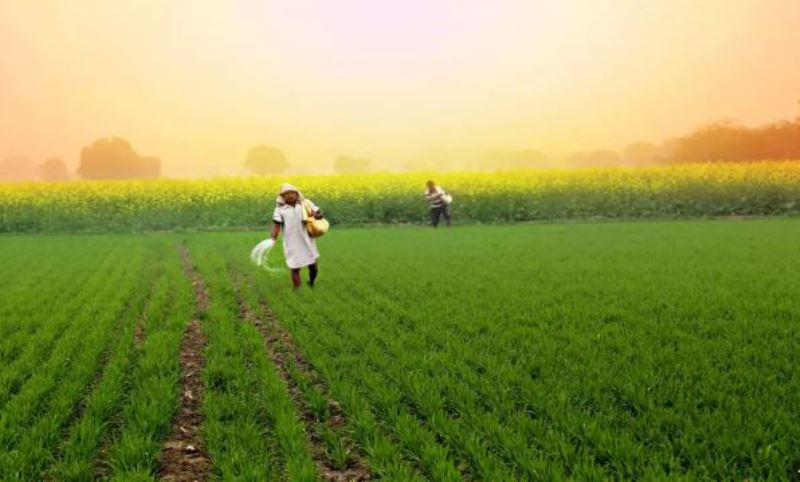
China has significantly tightened its restrictions on fertiliser export, slowing down imports into India and leading to a spurt in global prices, people familiar with the matter have said.
India relies on overseas markets to meet local demand of key crop nutrients, which are critical to food security in the world’s most populous nation. Farmers in India are currently sowing a range of summer crops, which account for about half of the country’s annual food supplies.
China is a large supplier of di-ammonium phosphate or DAP, the second-most widely used crop nutrient in India, whose imports have dwindled due to halting export clearances by China.
Signs of China’s curbs first emerged last summer when global supplies of urea, a nitrogen-based fertiliser, and phosphates, began tapering, people aware of the development said.
Much of the world depends on China for these two types of essential crop nutrients. The country has similarly squeezed supplies of rare-earth magnets, a critical raw material whose shortage has resulted in a crisis for automakers worldwide. China’s curbs on fertilisers followed firmer prices in its own markets, according to reports.
The Union government’s monthly report on stocks for May showed adequate availability of DAP, which millions of farmers use during initial stages of the summer-sown kharif season.
The report showed availability at 1.8 million tonne against an estimated monthly requirement of 941000 tonne while actual sales were slightly above 569000 tonnes. A year ago (May 2024), stocks of DAP were much higher at 2.8 million tonnes, official data show.
Opening stocks in the country on June 1 were nearly 42% lower at 1.25 million tonnes from a year ago. Suppliers are now almost exclusively depending on countries, such as Jordan, for DAP imports as Chinese authorities have clamped down on permits for outbound cargo.
“China’s decision to drastically reduce phosphate exports is sending shockwaves through the global market,” Stonex, a market analyst, said in a report last month.
Farmers in states, such as Punjab, are shifting to alternative mixes as importers have cut down on overseas purchases due to rising prices, an industry executive said.
According to sellers, the total cost of imported DAP has gone over $800 a tonne in some instances from around $630 a tonne a few months ago. Prices are inching back up to levels seen in 2022 when the Russia-Ukraine conflict broke out. The government didn’t immediately respond to a request for a comment on the matter.
Under a state-backed mechanism, manufacturers sell DAP to farmers at a maximum retail rate of ₹1350 for 50-kg packets. However, it is not uncommon for growers to pay more at times since DAP is not covered under a standard subsidy that applies to urea, another essential fertiliser.