
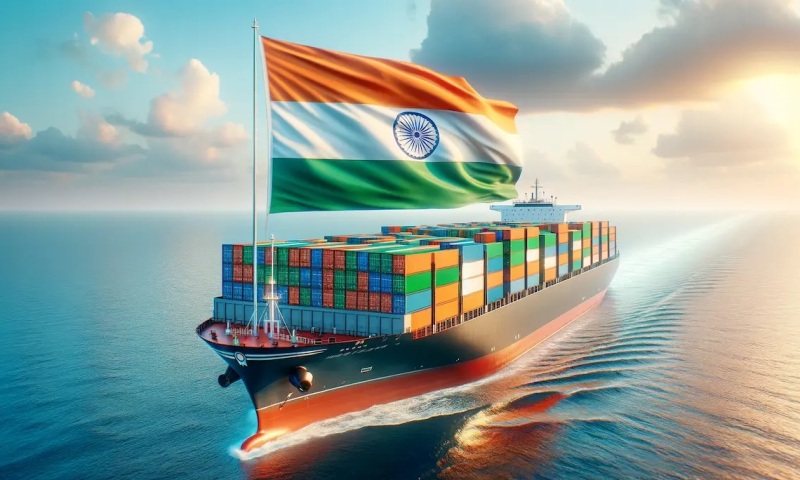
India is preparing for a major expansion of its merchant fleet, with the government expecting around 300 foreign-owned vessels to be re-registered under the Indian flag by 2030, senior officials said. The move is part of a larger strategy to enhance domestic shipping capacity, lower logistics costs and boost the country’s export competitiveness.
According to officials, the re-flagging process for nearly 50 vessels is already underway and is likely to be completed within the next three months. “Around 11 global shipping majors have expressed intent to shift part of their fleets to the Indian registry, reflecting the growing confidence in India’s maritime framework and regulatory stability,” they said.
Re-flagging refers to changing a vessel’s nationality so it falls under Indian maritime law. Once registered in India, these ships can transport domestic cargo, helping ease reliance on foreign-flag carriers that currently dominate India’s EXIM trade.
Officials noted that expanding the Indian-flag fleet will improve supply chain resilience during global disruptions, reduce freight outflows, and make logistics more affordable—especially for smaller exporters. The initiative is also expected to generate foreign exchange savings and rationalise freight rates, strengthening the competitiveness of Indian goods in global markets.
Policy Push to Attract Global Carriers
The government has rolled out a series of reforms in 2025–26 to encourage re-flagging. These include:
-
Priority allocation of government cargo to Indian-flagged vessels
-
Tax incentives for vessels leased through GIFT City
-
Extended economic benefits for ship management companies hiring Indian crew
-
Concessions on port charges and ancillary maritime services
-
A ₹70,000-crore package for shipbuilding, ship repair and port modernisation
Shipyards have also been classified as infrastructure, giving them access to long-term credit, tax breaks and smoother capital inflows. Large maritime infrastructure projects, including the ₹76,000-crore Wadhwan Port and major capacity expansions across non-major ports, are further strengthening the ecosystem.
Global Shipping Lines Respond
International carriers have begun responding positively to India’s incentive framework:
-
CMA CGM has committed to registering four container ships under the Indian flag starting April 2025 with CMA CGM Vitoria. The company has also ordered six LNG-powered 1,700 TEU vessels worth ₹3,000 crore from Cochin Shipyard.
-
MSC has confirmed plans to re-flag 12 container vessels to the Indian registry.
-
Maersk has already shifted Maersk Vilnius and Maersk Vigo from Singapore to India, citing “progressive maritime reforms” and strong economic fundamentals.
Closing the Gap in Fleet Ownership
India currently operates around 1,600 merchant vessels with a combined gross tonnage of 14 million tonnes—just about 2% of global tonnage. Yet, the country spends nearly $75 billion annually on chartering foreign ships.
The government views the re-flagging programme as a strategic tool to bridge this gap, build a stronger indigenous fleet and position India as a more influential player in global maritime trade.
With reforms accelerating and global carriers showing early commitment, officials believe the country is on track to significantly scale up its fleet strength by 2030, supporting India’s long-term export-led growth ambitions.