
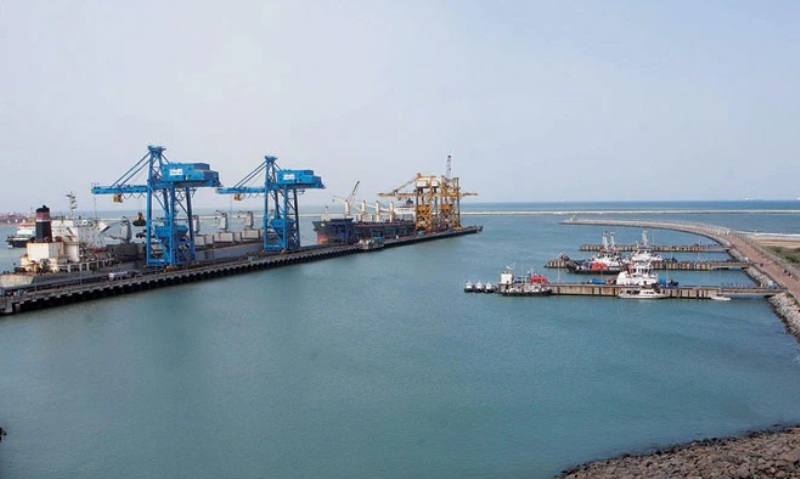
India is set to witness a landmark moment in its maritime sector with plans to list Kamarajar Port Ltd through an Initial Public Offering (IPO) in FY27. The port, a wholly owned subsidiary of the Chennai Port Authority, will become the first government-owned port in the country to be listed on the stock exchanges and only the fourth port company overall to go public.
The approval process for the IPO is in its final stages, according to a government official familiar with the development. The listing is being timed with Kamarajar Port’s silver jubilee year, adding symbolic weight to the move.
Named after freedom fighter, social reformer, and former Tamil Nadu Chief Minister K. Kamaraj, Kamarajar Port occupies a unique position in India’s port ecosystem. It is the only state-owned port incorporated under the Companies Act, unlike the 11 other major Union government ports, which function as statutory authorities under the Major Port Authorities Act, 2021.
Strong operational and financial performance
Kamarajar Port handled 48.41 million tonnes (mt) of cargo in FY25. During April–November of the current fiscal year, cargo throughput stood at 31.96 mt, reflecting steady performance despite volatility in global trade flows.
Financially, the port displays robust fundamentals. It reports a trailing twelve-month EPS of ₹18, EBITDA of ₹968 crore, and net debt of just ₹286 crore, highlighting strong cash generation and a conservative balance sheet ahead of market debut.
Valuation points to mid-cap listing
Based on an implied equity valuation range of ₹500–700 per share and 30 crore outstanding shares, Kamarajar Port’s market capitalisation is estimated at ₹15,000–21,000 crore, placing it firmly in the mid-cap infrastructure segment.
Three valuation approaches—P/E multiples, EV/EBITDA multiples, and a PEG-based method—have been used to triangulate fair value:
P/E method: Implies a range of ₹396–576 per share
EV/EBITDA method: Indicates ₹442–797 per share
PEG-based method: Suggests ₹497–720 per share
Taken together, these converge on a fair value band of ₹500–700 per share, aligning with the government’s internal assessment.
A rare PSU with private-sector economics
“For the government, the IPO represents a structural shift—bringing market discipline and transparency to a port that already operates under corporate law,” the official said. “For investors, Kamarajar Port offers a rare proposition: a state-owned asset with private-sector-level margins, low leverage, and predictable cash flows.”
As India’s port sector modernises and deepens private participation, Kamarajar Port’s listing could set a precedent for how public infrastructure assets are valued and accessed through capital markets, potentially reshaping investor perception of PSU-led infrastructure in the years ahead.