
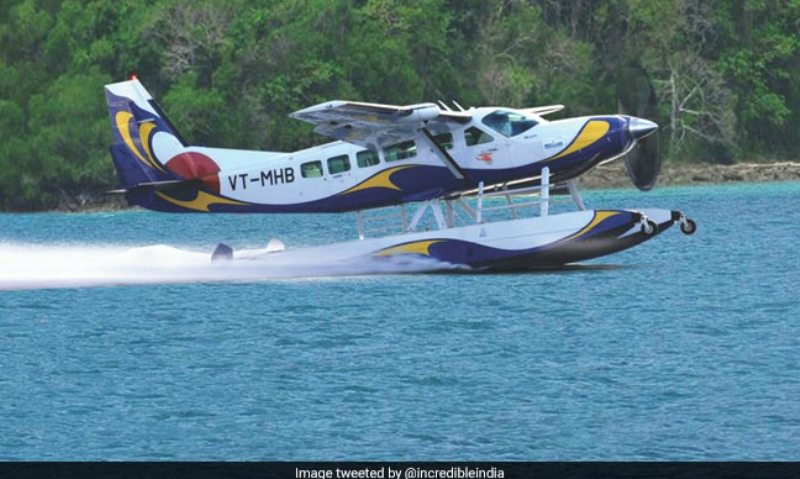
Canadian aircraft manufacturer De Havilland is evaluating global supply chain partnership opportunities, including in India, following the Union Budget announcement aimed at incentivising indigenous production of seaplanes and supporting their operations through a viability gap funding (VGF) scheme.
Responding to the policy push, De Havilland said it is continuously assessing manufacturing and supply chain partnerships across jurisdictions that support its products. “Manufacturing in jurisdictions that support our products is always something we consider when making investments,” a company spokesperson said.
De Havilland manufactures the Twin Otter aircraft, a proven platform that has been in service for over five decades. The aircraft can operate both from conventional runways and water bodies when fitted with floats. Of the 640 Twin Otter aircraft currently in service globally, 130 are amphibian variants, with nearly 100 operating in the Maldives.
In India, SkyHop Aviation—promoted by SpiceJet chairman Ajay Singh—has leased three Twin Otter aircraft and plans to initially deploy them on routes connecting Kochi with Lakshadweep, as well as on inter-island services within Lakshadweep. The company has secured regulatory approvals for foreign pilots and aircraft maintenance, and an air operator certificate for seaplane operations is expected shortly.
The seaplane venture is being led by Avani Singh, CEO of SkyHop Aviation. De Havilland said the Twin Otter is “perfectly suited for India” and noted that SkyHop’s progress through the regulatory process could serve as a template for other operators. “The Twin Otter flies safely and reliably around the world each day,” the company added.
Seaplane operations in India have so far struggled to gain traction. SpiceJet had launched a seaplane service between Ahmedabad’s Sabarmati riverfront and the Statue of Unity in Kevadia in October 2020, but the route was suspended within months due to Covid-19-related disruptions.
To revive the segment, the government introduced new rules for seaplane operations in 2024, easing requirements for water aerodromes and relaxing qualification norms for seaplane pilots. Industry stakeholders are now looking for stronger policy support, including extending the tenure of VGF per route under the UDAN regional connectivity scheme beyond the current three years.
“The viability gap funding support is especially important as it makes these operations financially feasible and gives confidence to operators to invest and scale up,” said Avani Singh. “Over time, this can significantly boost regional connectivity, tourism and local economies, and provide a real boost to the aviation sector.”