
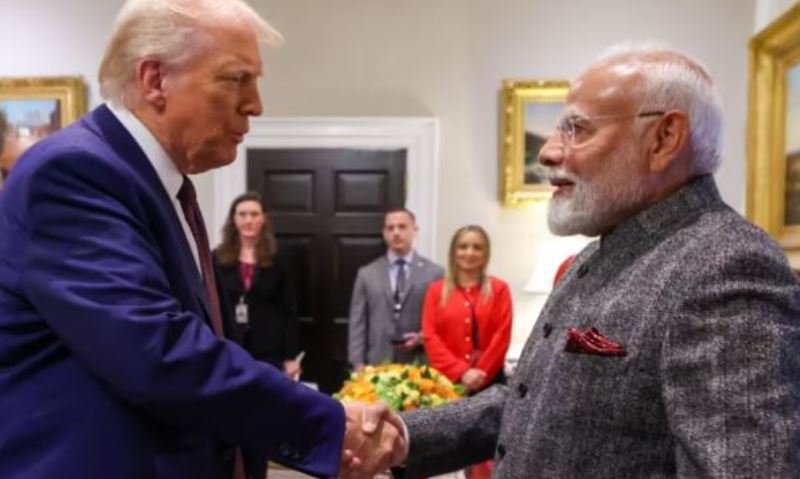
Donald Trump and Narendra Modi held a crucial telephonic conversation on Tuesday (March 24), focusing on the escalating conflict involving the U.S., Israel, and Iran, and its growing impact on global energy security.
This marks the first interaction between the two leaders since February 28, when hostilities began. The ongoing conflict has already claimed the lives of at least six Indian nationals in the region and disrupted energy flows through the strategically vital Strait of Hormuz, sending shockwaves across global oil markets.
In a post on X, Prime Minister Modi said he had a “useful exchange of views” with President Trump on the situation in West Asia. “India supports de-escalation and restoration of peace at the earliest. Ensuring that the Strait of Hormuz remains open, secure and accessible is essential for the whole world,” he stated.
The conflict has intensified over recent weeks, with U.S. and Israeli strikes targeting Iran’s energy infrastructure, followed by retaliatory attacks by Iran on regional energy assets. The escalating tensions have disrupted global supply chains, driven up crude oil prices, and raised concerns over LPG availability in India and other energy-dependent economies.
U.S. Ambassador to India Sergio Gor also confirmed the discussion, highlighting that both leaders stressed the importance of keeping the Strait of Hormuz open amid the crisis.
Meanwhile, diplomatic efforts to broker a ceasefire are reportedly underway, with multiple countries, including Pakistan, attempting mediation. However, Iran has denied engaging in any formal talks with the Trump administration.
The crisis has also impacted India-U.S. economic engagement. Bilateral trade negotiations, which had progressed significantly in February, have been paused in light of the conflict. The talks had followed earlier tensions after the U.S. imposed tariffs on Indian imports over New Delhi’s purchase of Russian oil.
As the global energy situation worsened, Washington has relaxed sanctions on Russian energy exports, enabling India to resume crude imports from Russia. The Ministry of External Affairs described the move as “normal,” noting that India continues to source energy from multiple countries to ensure supply stability.
India has simultaneously intensified diplomatic outreach to safeguard its energy interests. External Affairs Minister S. Jaishankar recently engaged with key global counterparts, including Russian Foreign Minister Sergei Lavrov, who has invited Prime Minister Modi to Moscow for the upcoming India-Russia annual summit.
Prime Minister Modi also spoke with Iranian President Masoud Pezeshkian on March 21, emphasising the importance of maintaining freedom of navigation. Parallel diplomatic engagements included talks between Mr. Jaishankar and Iranian Foreign Minister Seyed Abbas Araghchi, as well as a meeting with Iran’s Ambassador to India Mohammad Fathali.
Additionally, Mr. Jaishankar held discussions with U.S. Secretary of State Marco Rubio and met envoys from Gulf nations in New Delhi, underlining India’s proactive diplomatic push to navigate the crisis.
With tensions continuing to roil global energy markets, India remains focused on ensuring uninterrupted energy supplies while advocating for peace and stability in the region.