
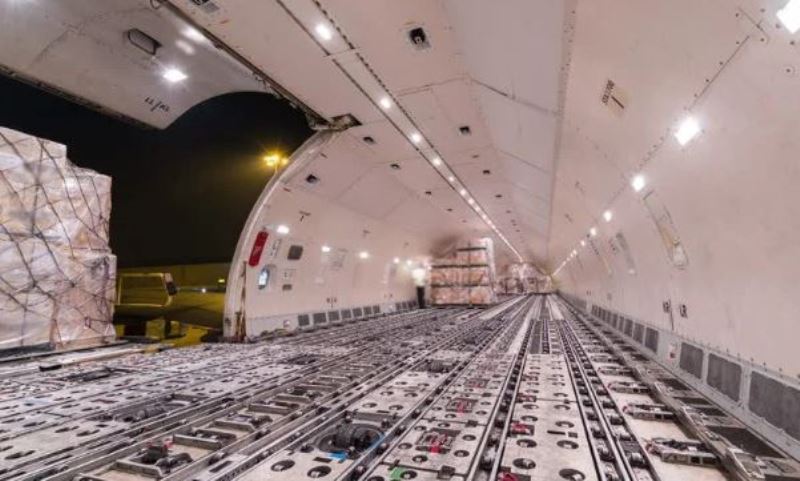
The growing deployment of widebody freighter aircraft could significantly reshape cargo flows across Africa’s Copperbelt, improving export efficiency and strengthening supply chains for one of the world’s most important mining regions.
Stretching across parts of Zambia and the Democratic Republic of Congo, the Copperbelt is a major global source of copper, cobalt, and other critical minerals used in electric vehicles, batteries, renewable energy systems, and industrial manufacturing. Efficient logistics links are increasingly vital as international demand for these commodities rises.
The introduction of larger freighter aircraft offers higher payload capacity, longer range, and more direct connections to global markets in Europe, the Middle East, and Asia. This could reduce reliance on multi-stop routings, lower transit times for urgent shipments, and improve reliability for high-value mining equipment, spare parts, and time-sensitive exports.
Widebody freighters may also support inbound cargo needs, including industrial machinery, technical components, and project materials essential for mining operations and infrastructure development in the region.
Industry experts note that enhanced air cargo capacity can complement road and rail networks, especially where surface transport faces congestion, border delays, or infrastructure constraints. Strategic airport upgrades and customs efficiency would further strengthen the benefits of expanded freighter operations.
As demand for critical minerals accelerates globally, stronger widebody freighter connectivity could position Africa’s Copperbelt as a more agile and competitive supplier in international commodity and manufacturing supply chains.