
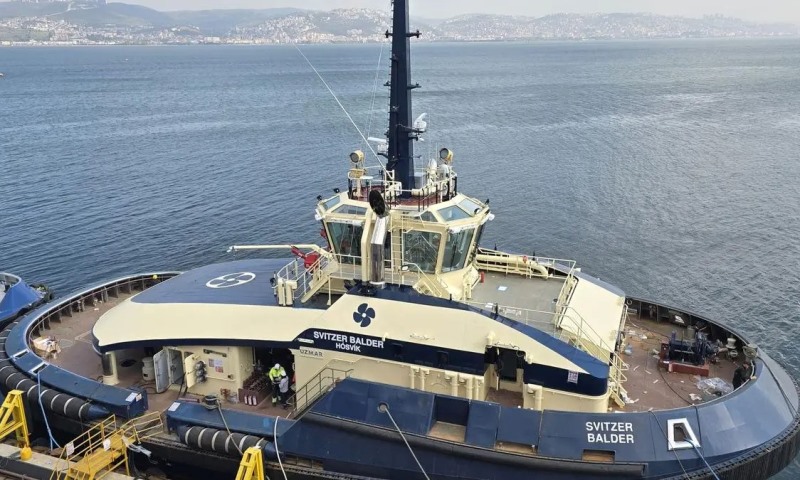
AYK Energy Ltd has successfully completed sea trials of Svitzer Balder, the world’s first battery-methanol harbour tug, marking a significant milestone in sustainable maritime technology. Built by Uzmar Shipyard in Türkiye, the vessel is now recognised as the most powerful electric escort tug globally, designed to operate efficiently in both harbour and near open-sea conditions. Scheduled for deployment at the Port of Gothenburg, the tug is expected to carry out over 90 per cent of towing and docking operations in zero-emission mode using its battery-electric propulsion system.
In another landmark development, Orient Express Corinthian, the world’s largest sailing yacht, was officially named on April 29 in Saint-Nazaire. The 220-metre vessel, flying the French flag, blends traditional French craftsmanship with advanced naval engineering. Featuring carbon masts capable of canting up to 70 degrees, the yacht is engineered to navigate beneath major global bridges with ease. It is set to depart for the French Riviera ahead of its inaugural Mediterranean season.
Meanwhile, momentum is building at the global regulatory level, as discussions at the International Maritime Organization Marine Environment Protection Committee (MEPC 84) signal progress toward emissions reduction. The World Shipping Council welcomed the constructive engagement among member states, emphasising the need for a cohesive global framework to meet the IMO’s 2023 greenhouse gas strategy. Industry leaders highlighted that while liner companies have already invested heavily in dual-fuel vessels, achieving meaningful emissions cuts will depend on coordinated international policy action.