
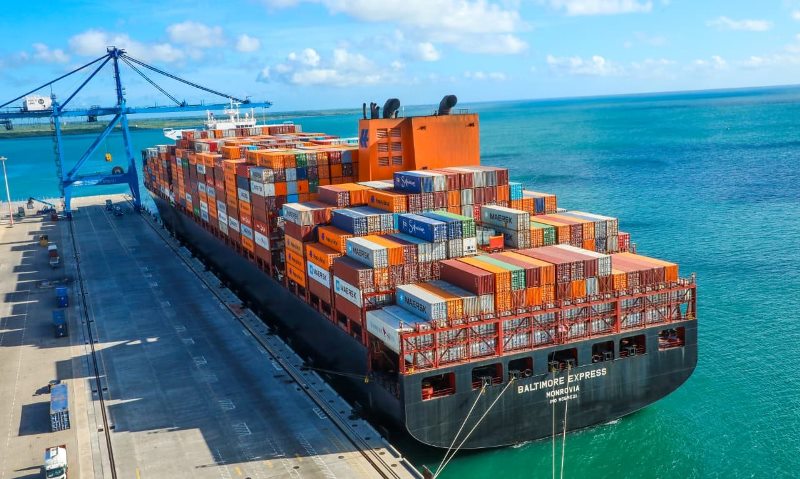
Lamu Port has received the largest vessel ever to dock in East and Central Africa, marking a significant milestone for regional maritime infrastructure and trade development. The arrival of the mega vessel highlights the port’s growing capability to handle large-scale international shipping traffic and reinforces its role as a strategic logistics gateway on Africa’s eastern coast.
Port authorities said the successful berthing demonstrates the operational readiness of Lamu Port’s deep-water facilities, which were developed to accommodate larger container ships and bulk carriers that many regional ports cannot efficiently handle. The milestone is expected to strengthen confidence among global shipping lines considering direct calls to the port.
The vessel’s arrival is being viewed as a major boost for the Lamu Port-South Sudan-Ethiopia-Transport (LAPSSET) Corridor project, which aims to improve regional trade connectivity and support cargo movement across East Africa. The corridor is designed to link Kenya with neighbouring landlocked markets including Ethiopia and South Sudan through integrated road, rail, pipeline, and port infrastructure.
Industry analysts said the ability to handle larger vessels could help reduce transshipment dependence on foreign hubs and improve trade efficiency for East and Central African economies. Direct calls by mega vessels may also lower logistics costs, shorten transit times, and attract greater investment into regional supply chains and industrial development.
The port’s expansion strategy aligns with broader efforts by African nations to modernise maritime infrastructure and capture growing international trade flows. Increasing cargo volumes, rising regional consumption, and stronger intra-African trade are driving demand for larger and more efficient port facilities across the continent.
Shipping experts noted that competition among African ports is intensifying as governments and port operators invest in deeper drafts, container terminals, logistics parks, and multimodal transport networks to position themselves as regional trade hubs. Lamu’s latest achievement is expected to enhance its visibility in the global maritime sector and attract additional shipping and logistics activity.