
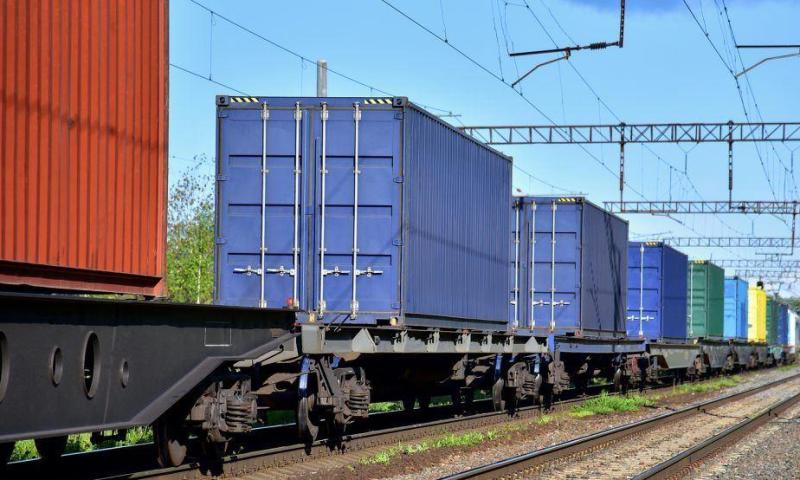
India’s Micro, Small and Medium Enterprises (MSMEs), which contribute more than half of the country’s exports, represent an estimated 100 million metric tonnes (MMT) of annual cargo potential for Indian Railways, according to a new knowledge paper jointly released by FICCI and KPMG India.
Titled “Unlocking Rail Freight Growth: Making Rail Accessible for India’s MSMEs,” the report highlights that while rail transport offers a significant cost advantage over road transport, accessibility challenges continue to limit its adoption among smaller businesses.
According to the study, rail freight costs average ₹1.96 per tonne-kilometre, nearly half of the ₹3.78 per tonne-kilometre incurred through road transport. The report notes that rail pricing is largely customer- and volume-agnostic, making it a more uniform and non-discriminatory mode of freight movement.
Despite this economic advantage, many MSMEs continue to rely on road transport due to barriers such as cargo aggregation difficulties, inadequate terminal access, limited wagon availability, weak first- and last-mile connectivity, and inconsistent service reliability. In several cases, these non-freight costs outweigh the savings achieved through rail’s lower line-haul rates.
The knowledge paper introduces three analytical frameworks to identify and address these barriers:
- Total Logistics Cost and Impact (TLCI) Framework – Evaluates the complete logistics cost incurred by businesses beyond the rail freight tariff.
- Market Aligned Terminal Accessibility (MATA) Model – Assesses whether terminal infrastructure and design effectively serve the freight requirements of MSMEs.
- Wagon Access and Availability (WAA) Model – Examines rolling stock availability, wagon design, commercial terms, and procurement planning to determine their suitability for smaller shippers.
The report recommends improving rail accessibility for MSMEs through investments in freight terminals, customer-oriented logistics solutions, cargo aggregation mechanisms, flexible wagon availability, and freight services tailored to smaller shipment sizes. These measures, it says, would enhance industrial competitiveness, reduce logistics costs, and increase rail’s share in India’s freight transportation market.
Commenting on the findings, Vivek Lohia, Chairman of the FICCI Committee on Railways and Managing Director of Jupiter Wagons Limited, said that India’s logistics costs are estimated at ₹24.01 lakh crore, equivalent to 7.97% of GDP, with smaller enterprises bearing a disproportionately higher burden.
“The opportunity extends beyond rail’s cost advantage to improving MSME access to the rail network,” Lohia said.
Sameer Bhatnagar, Partner and Lead – Mobility and Logistics at KPMG India, said a collaborative approach between the rail sector and MSMEs could significantly expand rail’s role in the country’s freight ecosystem.
“A symbiotic relationship can be incubated to expand rail’s role in India’s freight sector and offer greater market access to MSMEs,” he added.
The report concludes that improving accessibility—not just transportation economics—will be key to unlocking the estimated 100 MMT freight opportunity and strengthening India’s multimodal logistics ecosystem.