
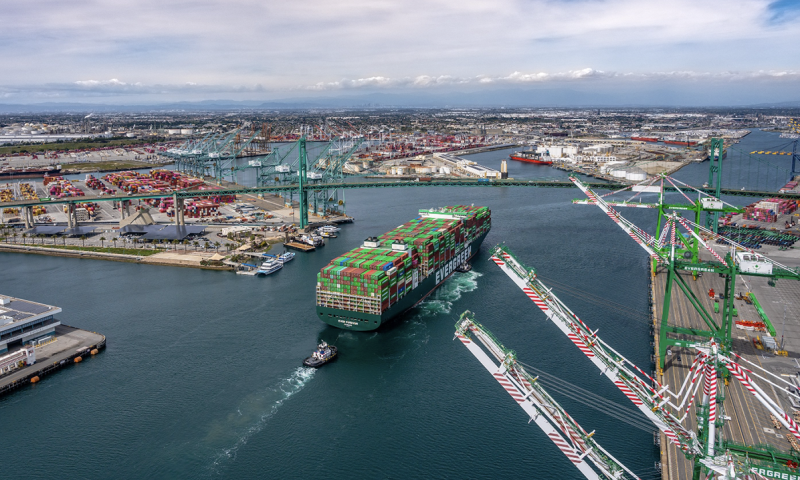
U.S. container import activity is remaining elevated into September, extending the stronger-than-expected peak-season trend that has characterised the 2026 trans-Pacific shipping market.
Imports had already shown significant resilience during the summer. U.S. container imports from the top 10 origin countries rose 4.9% in July, while overall July volumes reached one of the highest levels on record, according to Descartes data.
The strength in cargo flows has come despite tariff uncertainty and expectations that import demand would ease after an unusually early peak season. Industry analysts have noted that retailers and importers brought forward shipments amid uncertainty over trade policy and potential changes in tariff costs.
The National Retail Federation (NRF) has also maintained a relatively firm outlook for U.S. containerised imports. Its latest forecast puts total 2026 imports at around 25.5 million TEUs, broadly in line with 2025 levels, despite continuing trade-policy uncertainty.
The extended peak season is providing additional support to container shipping demand and keeping pressure on vessel capacity on major Asia–U.S. trade lanes. It could also influence freight rates and port operations if elevated volumes persist through the autumn.
However, the outlook remains uncertain. Tariffs, consumer demand, inventory levels and shifting sourcing patterns could influence import volumes during the final months of the year. For carriers, ports and logistics providers, the persistence of strong September flows suggests that the 2026 peak season may prove longer and less predictable than initially expected.