
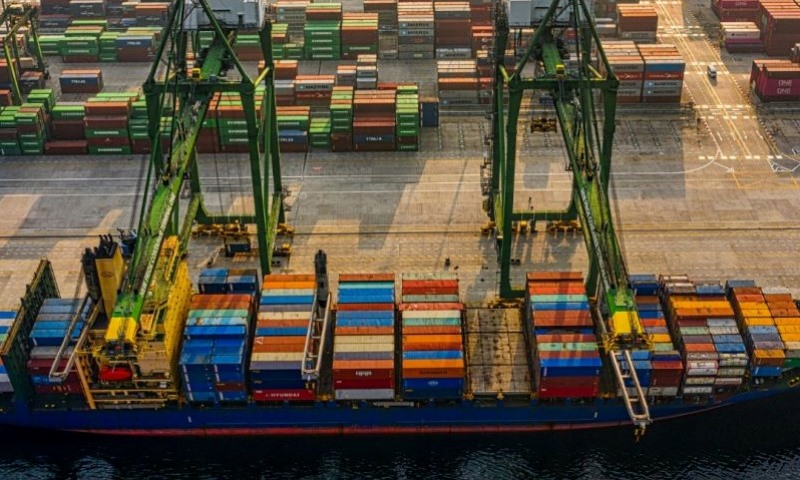
High freight yields are attracting new container services to the India–Middle East trade, as carriers seek to capitalise on strong demand and elevated rates despite continued operational challenges on the route.
The trade has become increasingly attractive for shipping lines as disruptions and capacity constraints have pushed up freight earnings. Carriers are responding by introducing or expanding services to capture cargo flows between the Indian subcontinent and key Middle Eastern markets.
The additional services are expected to provide exporters and importers with more shipping options and potentially improve connectivity between major Indian ports and hubs in the Gulf region. However, schedule reliability remains a concern amid the wider uncertainty affecting maritime trade in the region.
The Middle East is a major market for Indian exports, including textiles, engineering goods, chemicals, food products and pharmaceuticals. Strong cargo flows have supported demand for container capacity even as carriers adjust networks and operating patterns.
Shipping lines are also closely monitoring security conditions and vessel-routing risks in the region. Any further disruption could affect transit times, vessel utilisation and freight rates.
The emergence of new services highlights the commercial opportunities available to carriers in the India–Middle East trade. If demand and freight yields remain strong, more operators could consider deploying additional capacity or launching new services on the route.