
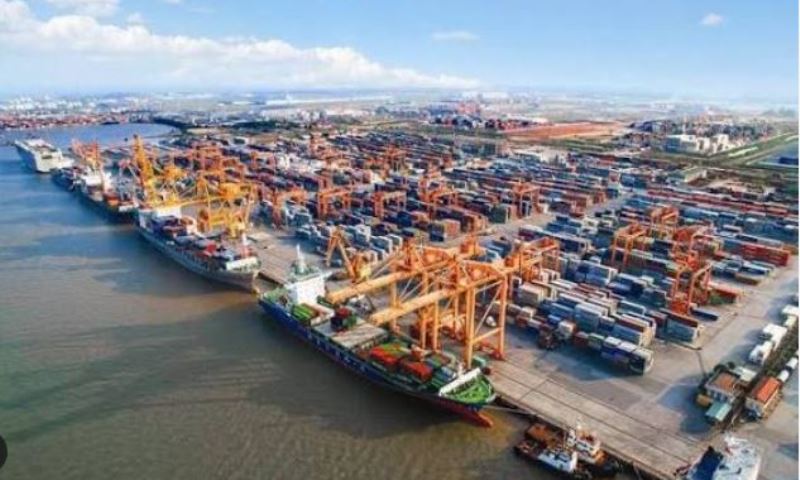
Vietnam has introduced a joint berthing arrangement at its container terminals to accommodate three large containerships, marking a step towards improving port capacity and operational efficiency.
The initiative is aimed at optimising berth utilisation, reducing vessel waiting times and supporting the handling of larger ships as container volumes and demand for maritime transport continue to grow.
The shared berth connects Cai Mep International Terminal (CMIT) and Tan Cang–Cai Mep Thi Vai Terminal (TCTT) in the Cai Mep–Thi Vai deep-water port cluster in Ho Chi Minh City. Each terminal contributes 600 metres of quay, creating a continuous 1,200-metre berth capable of accommodating three large container ships simultaneously, compared with two previously.
The terminals expect the arrangement to increase operating capacity by around 30–40% at each facility, equivalent to an additional 400,000–500,000 TEUs annually per terminal. Combined, the shared berth could provide nearly 900,000 TEUs of additional annual capacity.
The model enables the terminals to coordinate vessel scheduling, berth allocation, cranes, equipment and personnel while making better use of existing infrastructure. It is also intended to improve flexibility when vessel schedules change and help shipping lines manage larger vessels more efficiently.