
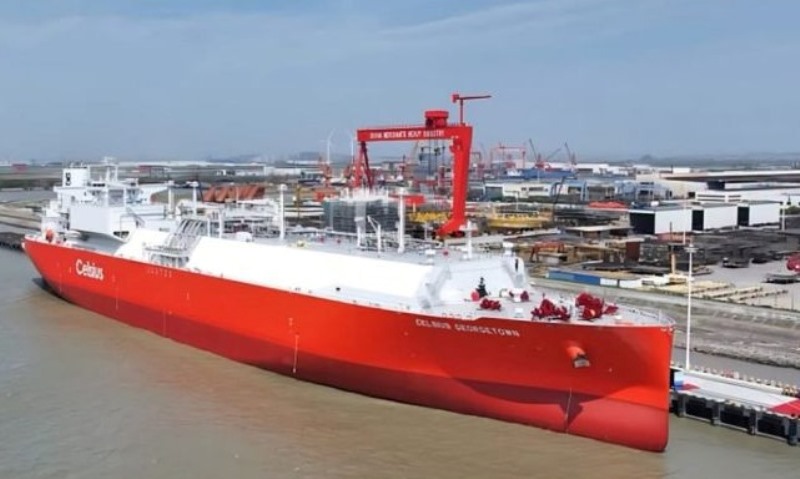
Yangzijiang Xinfu has delivered a 175,000-cubic-metre liquefied natural gas (LNG) carrier, marking a significant milestone in its shipbuilding activities and highlighting the continued development of specialised vessels for global energy transportation.
The large-capacity carrier is designed to transport LNG in liquid form at extremely low temperatures, enabling natural gas to be moved efficiently between export terminals and receiving facilities worldwide. LNG carriers play a crucial role in international energy supply chains, connecting gas-producing countries with markets that rely on imported fuel.
The delivery underscores the importance of advanced shipbuilding capabilities as demand for specialised gas transportation vessels continues to shape the maritime industry. These ships require sophisticated cargo containment systems, temperature-control technology and safety arrangements to handle LNG during long-distance voyages.
The global LNG shipping market supports energy trade across Asia, Europe and other regions, serving power generation, industrial activity and domestic consumption. Reliable vessel availability is essential for energy companies seeking to coordinate production, export schedules and deliveries to overseas customers.
For shipbuilders, completing LNG carrier projects also demonstrates capabilities in constructing technically complex vessels for the international maritime market. The sector remains an important part of the wider transition towards more diversified global energy supply networks.
The delivery of the 175,000-cubic-metre vessel represents a notable development for Yangzijiang Xinfu’s shipbuilding operations. Further details regarding the vessel’s owner, charter arrangements, shipyard specifications and operational deployment were not provided in the available information.
As international LNG trade continues to depend on specialised shipping capacity, the addition of large carriers remains important to maintaining connections between global gas suppliers and consumers.