
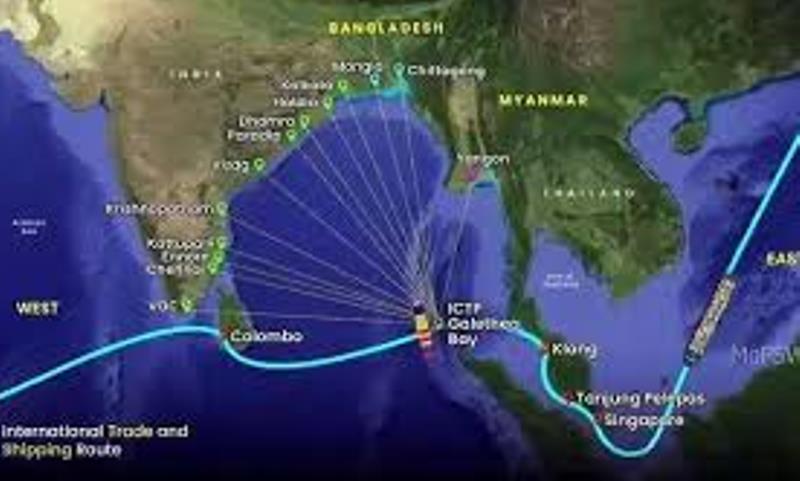
India is seeking to strengthen the Andaman and Nicobar Islands as a strategic maritime and economic gateway to the Indo-Pacific, focusing on shipping route security, port connectivity and resilient supply chains amid disruptions to global trade.
The initiative was outlined at a curtain-raiser event for the Andaman Dialogue 2027, which brought together diplomats, maritime experts, government officials and industry representatives from more than 15 countries to discuss regional economic and security cooperation.
Scheduled for March 12–14, 2027, at Swaraj Dweep in the Andaman Islands, the dialogue will focus on strengthening maritime infrastructure, trade connectivity and partnerships across the Indian Ocean and Indo-Pacific regions.
Addressing the gathering through a recorded message, Commerce and Industry Minister Piyush Goyal highlighted the islands’ potential to serve as an economic bridge between South and Southeast Asia, particularly in trade, logistics, shipping, digital infrastructure and finance.
Goyal also underscored the growing disruptions to global supply chains and rapid technological shifts, emphasising the need for trusted partnerships, secure critical infrastructure and greater regional economic resilience.
Admiral Dinesh K. Tripathi, Chairman of the National Maritime Foundation and former Chief of the Naval Staff, highlighted the islands’ strategic location near major shipping routes connecting the Bay of Bengal, the Indian Ocean and the wider Indo-Pacific.
He called for enhanced regional cooperation in maritime surveillance, port connectivity, shipbuilding, ship repair and seafarer training, stressing that secure sea lanes are essential for international commerce and regional stability.
Tripathi noted that India–ASEAN trade reached approximately $128 billion in 2025–26, accounting for around 11% of India’s total trade. The figures underline the economic importance of strengthening maritime links with Southeast Asian countries.
He also outlined plans to expand international cooperation through the Information Fusion Centre–Indian Ocean Region (IFC-IOR), which currently has liaison officers from approximately 16–17 partner countries. India aims to increase this number to 50 by 2028.
Proposing wider maritime information-sharing arrangements, Tripathi called for extending such cooperation to commercial shipping in the Andaman Sea and strengthening collaboration among regional ports and maritime industries.
On infrastructure development, he referred to a ₹69,725-crore package for India’s shipbuilding and maritime sector and investment commitments of approximately ₹12 lakh crore announced during India Maritime Week. He also highlighted the close links between naval and commercial shipbuilding, which rely on shared industrial capabilities, skilled workers and resilient supply chains.
A panel discussion at the event examined opportunities to translate shared policy priorities into practical regional economic partnerships involving businesses, investors and institutions. Participants discussed vulnerabilities affecting maritime trade routes and critical infrastructure, including subsea cables, while emphasising resilient regional networks and rules-based cooperation.
Diplomatic representatives from Fiji, Djibouti, Seychelles, Sri Lanka, Australia, Singapore, Mauritius, Thailand, Vietnam and the Maldives attended the event, reflecting the broad regional interest in maritime security and economic cooperation.
The curtain-raiser was jointly convened by the Forum for Integrated National Security (FINS) and the Centre for Domestic Economy Policy Research (C-DEP), with participation from senior government officials and maritime industry representatives.
The upcoming Andaman Dialogue is expected to focus on practical cooperation to strengthen the security and resilience of maritime assets and infrastructure that underpin regional trade and economic activity. The initiative places the Andaman and Nicobar Islands at the centre of India’s efforts to deepen Indo-Pacific connectivity and strengthen the resilience of regional maritime supply chains.