
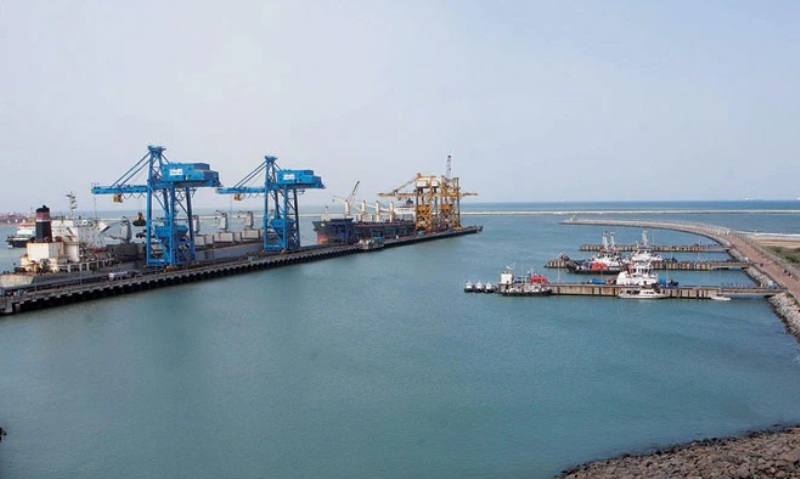
Union Minister of Ports, Shipping and Waterways, Sarbananda Sonowal, informed the Lok Sabha on Tuesday (30 July) that the total capacity of India’s 12 major ports has surged by 87.01 per cent between 2014-15 and 2023-24.
The capacity of Paradip Port saw a rise of 141.86 per cent, while Kamarajar Port and V O Chidambaranar Port in Tamil Nadu achieved expansions of 154.05 per cent and 150.19 per cent, respectively.
The Syama Prasad Mookerjee Port in Kolkata increased its capacity by 31.29 per cent, while the Deendayal Port in Gujarat experienced a remarkable 121.79 per cent increase, significantly boosting its operational capability.
Other ports, including Chennai, Cochin, and New Mangalore, also reported notable increases.
According to an Economic Times report, Sonowal provided a comprehensive update on significant issues impacting the maritime sector in the Lok Sabha. His detailed response addressed concerns related to container shortages and port capacity expansion, highlighting the government’s ongoing efforts and strategic measures.
Addressing Container Shortages and Operational Challenges
Regarding container shortages affecting exporters, Sonowal clarified that there is no acute shortage of containers. Recent challenges stemmed from the Red Sea crisis, which began late in 2023 and persisted into early 2024.
This crisis led to significant ship diversions from the Suez Canal to the Cape of Good Hope, increasing transit times by 35 to 40 per cent. Consequently, delays at major global ports and elevated charter hire costs occurred.
To mitigate these issues, the government has implemented several proactive measures. Shipping companies are repositioning empty containers globally based on market needs.
The Ministry of Commerce & Industry has been actively working under its Service Improvement Group framework, conducting regular interactions with shipping lines, port authorities, and export-import associations.
Notable steps include advising safety convoys for vessels navigating disrupted routes and addressing inland container depot congestion through coordination with the Container Corporation of India.
Additionally, the Directorate General of Shipping is promoting the ownership and operation of containers by Indian entities as a long-term solution.
The development of tracking and tracing mechanisms through the Unified Logistics Interface Platform (ULIP) and Logistics Data Bank (LDB) aims to improve the turnaround time of export containers, thereby enhancing their availability, Sonowal added.