
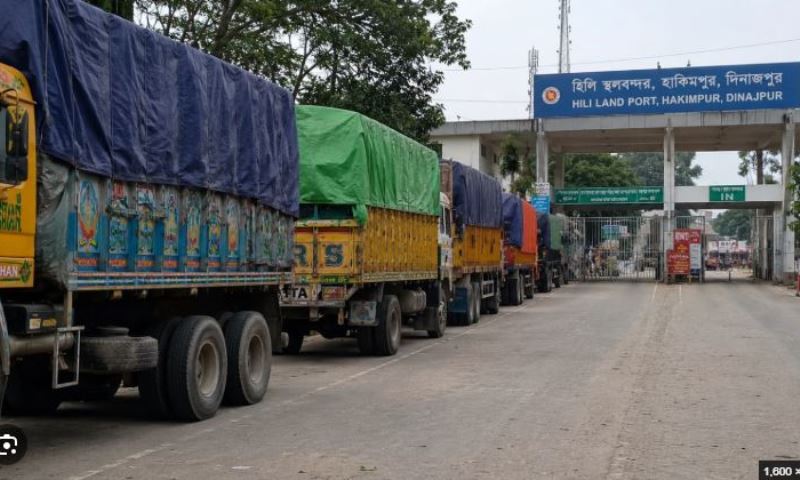
Cross-border import and export activities between Bangladesh and India have resumed through the Hili Land Port in Dinajpur after a six-day suspension caused by an indefinite strike by Indian traders. Operations restarted on Saturday, September 5, after the traders withdrew their strike following assurances from the Indian government and local administration that issues affecting trade through the port would be addressed.
The suspension had begun after Indian traders raised concerns over the port’s declining competitiveness compared with other land ports in West Bengal. The Hili Exporters and Customs Clearing Agents Association had announced an indefinite halt to import-export activities from August 30, disrupting the movement of cargo between the two countries.
Following the withdrawal of the strike, normal cargo movement resumed during the afternoon of September 5. By around 4:30pm, five trucks carrying imported Indian goods had entered Bangladesh, while Bangladeshi export trucks also began crossing into India. Authorities arranged for imported consignments to be unloaded promptly and transported onward to destinations across Bangladesh.
The reopening has restored activity for traders, customs officials, clearing and forwarding agents, transport operators and other businesses dependent on the land port. The six-day interruption had affected cargo movement and created concerns over financial losses among traders on both sides of the border.
Importantly, the suspension affected commercial cargo operations rather than passenger movement. The Hili immigration checkpoint continued to operate during the trade stoppage, allowing passengers with valid documents to travel between Bangladesh and India. Passenger movement remained normal even while cargo operations were halted.
The resumption of operations is expected to help clear accumulated cargo and restore regular Bangladesh-India trade flows through the Hili crossing. The development also highlights the importance of addressing infrastructure, competitiveness and operational concerns raised by traders to prevent further disruptions at one of the key land-based trade routes between the two countries.