
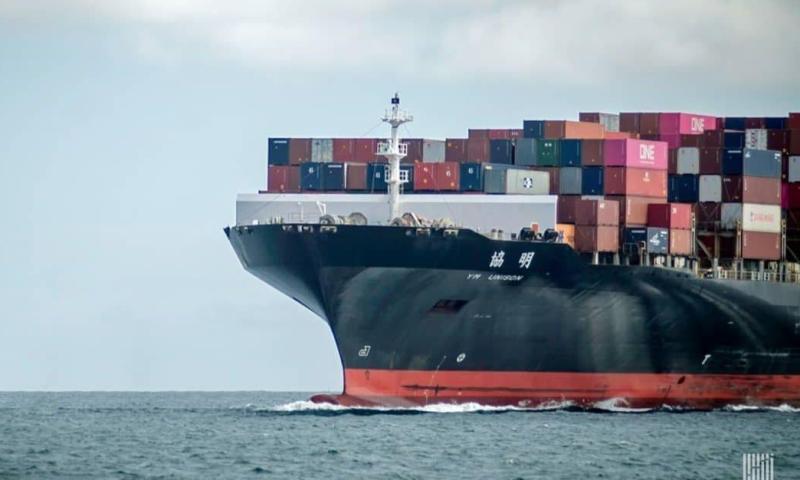
The Far East and Oceania are the last two intercontinental shipping areas for which the deepsea shipping lines/ship agents are switching to the Secure Chain. The connection of companies with import containers from Africa, the Middle East, India, and Pakistan was completed on the 1st of October. Before that, the same was done for imported cargo from Latin America and North America. After the 3rd of February 2025, the shipping lines/ship agents also want to route their intra-European and feeder cargo via the Secure Chain.
Participating shipping lines
Since the launch of the Secure Chain, more than 630,000 import containers have already been handled via the new, secure, and reliable approach in the port of Rotterdam. Some 1,475 shippers/forwarders and 960 inland operators have now made the switch.
All the major deepsea shipping lines are implementing the Secure Chain: CMA CGM, COSCO Shipping, Evergreen, Hapag-Lloyd (via Secure Container Release), HMM, Maersk, Marfret, MSC, ONE, OOCL, Yang Ming and ZIM. This gives the port of Rotterdam a uniform approach for securely and reliably releasing and collecting import containers without a PIN code.
Actively connecting
The initiative for connecting companies to the Secure Chain lies with the shipping lines and their ship agents. They each separately approach their customers with the message that containers will no longer be released using PIN codes and ask them to switch as soon as possible. Companies that do not want to wait for this request can also proactively contact their shipping line. In this way, they are immediately assured of a secure and reliable operational approach.