
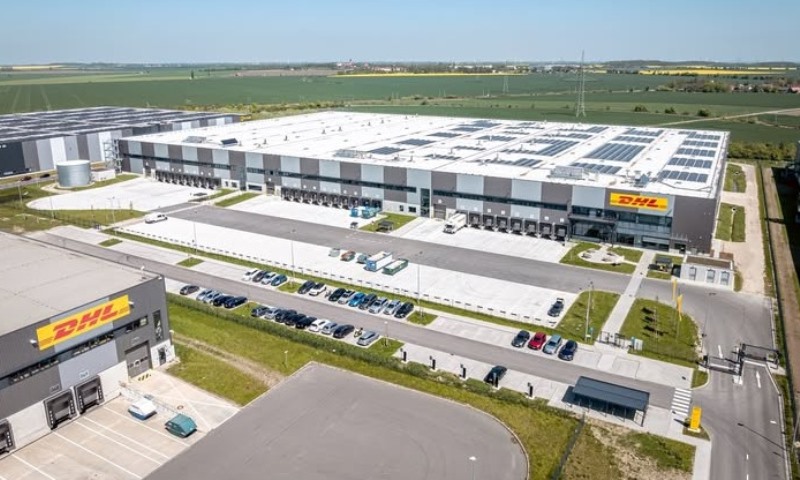
DHL Supply Chain has inaugurated a new climate-neutral logistics centre in Halle (Saale), Germany, further strengthening its footprint in the strategically important Leipzig-Halle logistics region. The new facility expands DHL’s operational capacity and is designed to support both existing customers and future growth across key industry sectors.
The state-of-the-art logistics centre has been developed in line with DHL Group’s sustainability strategy, featuring energy-efficient building design, renewable energy usage, and climate-neutral operations. It will handle a wide range of contract logistics activities, including warehousing, value-added services and distribution, enhancing supply chain resilience for customers operating in Germany and across Europe.
With its proximity to major transport corridors, intermodal connections and the Leipzig/ Halle Airport cargo hub, the new site offers fast and flexible access to domestic and European markets. DHL Supply Chain said the investment underlines its long-term commitment to the region, which has emerged as one of Germany’s most dynamic logistics clusters.
The Halle (Saale) facility is part of DHL’s broader plan to expand sustainable logistics infrastructure in Europe, aligning with the group’s goal of achieving net-zero emissions by 2050 while meeting growing demand for efficient, future-ready supply chain solutions.