
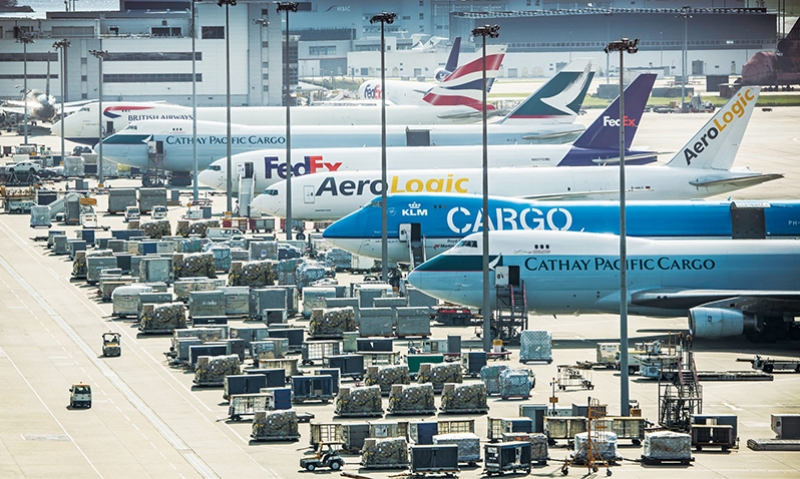
Hong Kong International Airport recorded a 4.9% year-on-year increase in cargo throughput in April, handling approximately 423,000 tonnes of freight as air cargo demand remained resilient across key trade markets.
Airport authorities said the growth was supported by higher export volumes and sustained demand for cargo movement linked to e-commerce, electronics, industrial products and high-value shipments. Traffic growth was particularly notable on trade routes connecting Hong Kong with Southeast Asia, Europe and North America.
Industry analysts noted that Hong Kong continues to maintain its position as one of the world’s leading air cargo hubs due to its strong connectivity, extensive airline network and advanced cargo handling infrastructure. Recovery in global trade activity and stable cross-border logistics demand have also contributed to improved cargo performance.
The airport has been focusing on expanding cargo handling efficiency and strengthening multimodal logistics integration to support rising freight volumes. Ongoing investments in digitalisation and smart cargo technologies are expected to further enhance operational capabilities and turnaround times.
Aviation experts said air cargo markets remain supported by demand for fast and reliable transport services, particularly for time-sensitive and high-value goods, despite continued geopolitical and supply chain uncertainties affecting global trade flows.