
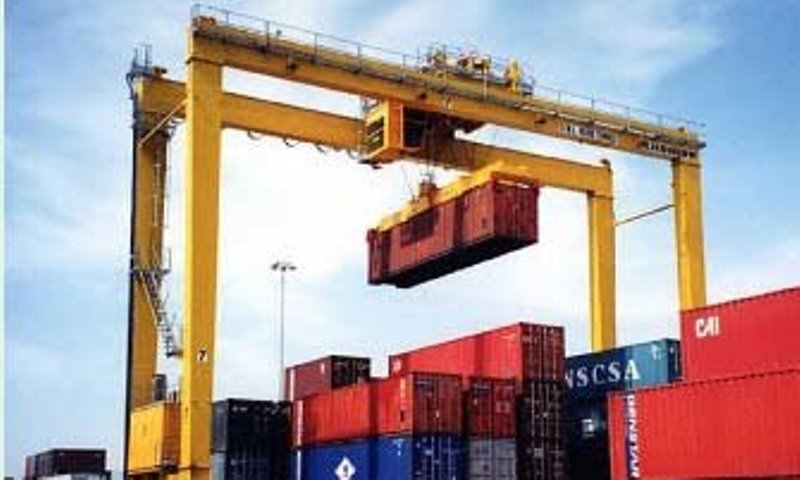
Japanese ship equipment manufacturer Mitsui E&S has replaced the conventional diesel engine generator set installed on a near-zero-emission rubber-tired gantry crane (RTG) – previously delivered to Utoc Corporation at the Yokohama Port Minami-Honmoku Pier Container Terminal – with a hydrogen fuel cell power pack, as part of an on-site zero-emission cargo handling equipment trial.
It is understood that Mitsui E&S has been developing cargo handling equipment utilizing hydrogen fuel for many years. The RTG, which the company provided technical support for and retrofitted, is reportedly now being used in Utoc’s on-site demonstration project as a zero-emission cargo handling machine operating solely on hydrogen.
This initiative is expected to enable CO2 emission reduction at ports and contribute to achieving carbon neutrality in port operations.
Mitsui E&S noted it will further promote technological development aimed at reducing the environmental impact of ports through the provision of cargo handling equipment products and services powered by hydrogen fuel.
It is worth mentioning that in 2024, the company announced the commencement of commercial operations of the “world’s first” hydrogen fuel cell-powered RTG crane at the Port of Los Angeles, U.S. In addition, the first cargo handling operations using a hydrogen-fueled RTG crane began in Japan.
In other, more recent news, Japan’s Tsuneishi Shipbuilding made the decision to acquire all shares of Mitsui E&S Shipbuilding from Mitsui E&S, making it a wholly-owned subsidiary. Furthermore, Mitsui E&S commenced test operation of the large-bore low-speed ammonia dual fuel engine as “a major step” toward decarbonizing the shipping industry.