
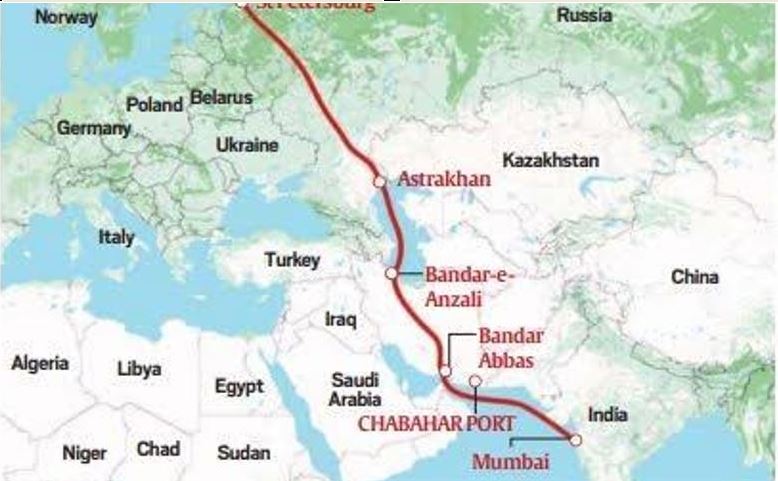
India is reportedly planning to revive and accelerate work on the strategic 700-km Chabahar–Zahedan railway in Iran, a move that could significantly enhance connectivity with Central Asia, improve access to Iranian energy supplies, and strengthen the International North-South Transport Corridor (INSTC).
According to reports, the proposed rail line will link Iran’s Chabahar Port on the Gulf of Oman with Zahedan, near the Afghanistan border, integrating the port with Iran’s national railway network and the INSTC. The project is expected to be discussed during upcoming engagements between Indian and Iranian officials, although no official timeline has been announced.
The renewed momentum follows reports of easing US sanctions on Iran under a recent peace agreement, which could allow the resumption of Iranian crude oil exports. If the policy shift remains in place, India could restart regular imports of Iranian oil after nearly seven years while improving the commercial viability of the Chabahar trade corridor.
Once completed, the railway is expected to provide India with a faster and more cost-effective route to Afghanistan, Central Asia, and Eurasia by bypassing Pakistan and reducing reliance on traditional maritime routes. The corridor is also expected to facilitate energy trade and strengthen India’s access to emerging regional markets.
The project, originally estimated to cost around $1.5 billion, is expected to be largely financed by Iran, with India contributing approximately $400–500 million over the coming years while providing engineering and technical expertise.
Industry observers view the railway as a key strategic infrastructure project that would complement India’s investments in Chabahar Port and serve as a counterbalance to China’s expanding regional footprint, particularly through Pakistan’s Gwadar Port and the China-Pakistan Economic Corridor (CPEC).
According to Union Ports Ministry data cited in reports, Chabahar handled around 200,000 tonnes of bulk cargo during FY25. Prior to recent disruptions in West Asia, cargo volumes in FY26 had already approached the port’s current annual container handling capacity of 100,000 TEUs. Expansion plans aim to increase container capacity to 500,000 TEUs over the next few years.
The Chabahar–Zahedan rail link is expected to play a pivotal role in strengthening India’s strategic presence in the region, improving multimodal cargo connectivity through the INSTC, and deepening trade and economic engagement with Central Asian countries.