
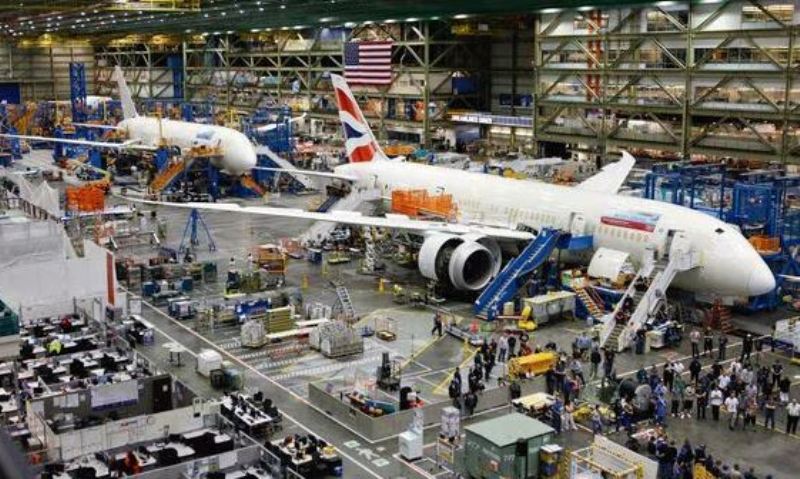
India and the United States have agreed to remove reciprocal tariffs on the trade of select aircraft parts and machinery under an interim framework for reciprocal and mutually beneficial trade, marking a significant boost for the aerospace manufacturing ecosystem in India.
As part of the interim agreement, India plans to purchase nearly $500 billion worth of US products over the next five years, including aircraft and aircraft components, energy, precious metals, technology products and coking coal. The move is expected to deepen bilateral trade ties and accelerate industrial collaboration between the two countries.
Commerce and Industry Minister Piyush Goyal said both Boeing and Airbus are increasingly viewing India as a major global hub for aircraft parts manufacturing.
“I am told both these companies are looking at India as the largest foreign original equipment manufacturer (OEM) for parts going forward. I have had conversations with the top CEOs and board members of both firms, and there is a lot of excitement around the US–India partnership,” Goyal said while outlining the contours of the interim agreement.
India has already taken steps to reduce import duties on aviation components. In the Union Budget for 2026–27, Finance Minister Nirmala Sitharaman announced an exemption from basic customs duty on components and parts required for the manufacture of civilian, training and other aircraft, along with exemptions on raw materials used in aircraft manufacturing.
US aircraft manufacturer Boeing, which has a significant footprint in India, sources about $1.25 billion annually from the country through a network of over 300 Indian suppliers. The company also has large commercial aircraft orders from Indian carriers, including Air India and Akasa Air, and collaborates closely with Indian aerospace firms such as Tata Advanced Systems Ltd.
Welcoming the development, Salil Gupte, President, Boeing India and South Asia, said the agreement reinforces long-standing efforts to promote tariff-free trade in aerospace.
“The US–India trade agreement is a strong signal of deeper economic partnership. Boeing has consistently advocated a zero-for-zero tariff approach in aerospace and defence. A tariff-free framework would accelerate industrial growth, strengthen national security, and create win-win opportunities for both nations,” he said.
Industry leaders in India’s aerospace manufacturing sector also welcomed the move. Aravind Melligeri, Executive Chairman and CEO of Aequs Ltd, said the zero-rating of certain aircraft parts came as a positive surprise.
“At a time when the industry was preparing for tariffs of around 18 per cent, this zero rating is more than welcome,” Melligeri said, adding that it would improve cash flows and enhance cost competitiveness across the supply chain.
Over the past two decades, Indian companies have steadily entered the global aerospace supply chain by leveraging the country’s engineering and manufacturing capabilities. The government’s continued push for ‘Make in India’ in aircraft, helicopter and component manufacturing has led to deeper collaboration between Indian firms and foreign OEMs, helping build a small but rapidly growing aerospace manufacturing ecosystem in the country.