
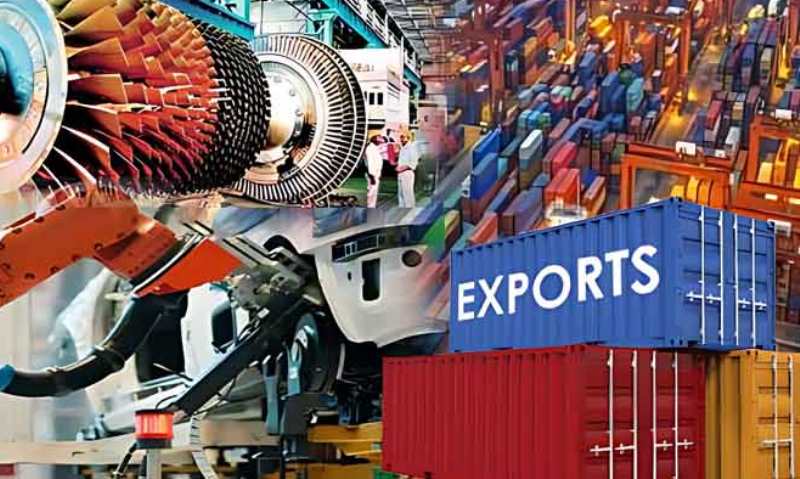
India’s engineering goods exports are on track to cross $23 billion this financial year, representing growth of nearly 15%, according to Engineering Export Promotion Council (EEPC) India Chairman Pankaj Chadha. The sector has maintained strong momentum despite geopolitical tensions, trade-policy uncertainty and higher tariffs in key markets.
Chadha said engineering exports were around $20 billion last year, while shipments during the first four months of the current fiscal have already reached $7.7 billion, compared with $6.9 billion during the corresponding period a year earlier. This represents approximately 12% year-on-year growth and keeps the sector on course for overall growth of 12–15% this fiscal.
The strong performance follows a record year for India’s broader engineering export sector. Engineering exports reached $122.43 billion in FY2025-26, up 4.86% from $116.75 billion a year earlier, according to EEPC India.
Iron and steel lead growth
Iron and steel products have emerged as particularly strong performers. Chadha said exports of these products have increased by 102%, helped in part by the fact that Indian exporters face the same US Section 232 tariff treatment as competing suppliers in the relevant product categories.
The latest EEPC data also show broad-based growth across several engineering segments, including metals such as copper, zinc, aluminium, nickel, iron and steel, as well as two- and three-wheelers, railway equipment, machine tools, motor vehicles and electrical machinery. Engineering exports increased about 16.8% to $22.66 billion during April-May 2026-27.
US tariff risks remain
Despite the positive export outlook, exporters remain concerned about potential changes in US trade policy. Chadha identified a proposed US tariff bill targeting countries that purchase Russian oil as a major risk for Indian engineering exporters.
The proposed legislation, if enacted, could allow the US President to impose tariffs of up to 100% on India, China and other countries purchasing Russian oil. Chadha warned that such measures could put Indian exporters at a competitive disadvantage and potentially require a reassessment of tariff structures.
On the proposed India-US Bilateral Trade Agreement, Chadha said India should seek a competitive advantage over rival exporting nations before accepting significant concessions. He stressed that any sacrifices made by Indian exporters should be adequately compensated through improved market access and competitiveness.
Sector outpaces overall economy
Chadha also highlighted the engineering sector’s performance against the broader Indian economy. While India recorded 7.8% GDP growth in the first quarter, he said the engineering sector was currently expanding at around 18%, supported by healthy order books reported by exporters.
The continued expansion indicates that Indian engineering manufacturers are benefiting from changing global supply chains and demand for competitively priced products. However, EEPC has also emphasised the need for exporters to improve scale, product quality, logistics capabilities and compliance with international standards.
With strong early-year shipments and diversified demand across markets and product categories, India’s engineering sector appears well positioned to achieve the $23 billion export target for the current fiscal year, although tariff developments and global trade uncertainty remain key risks to the outlook.