
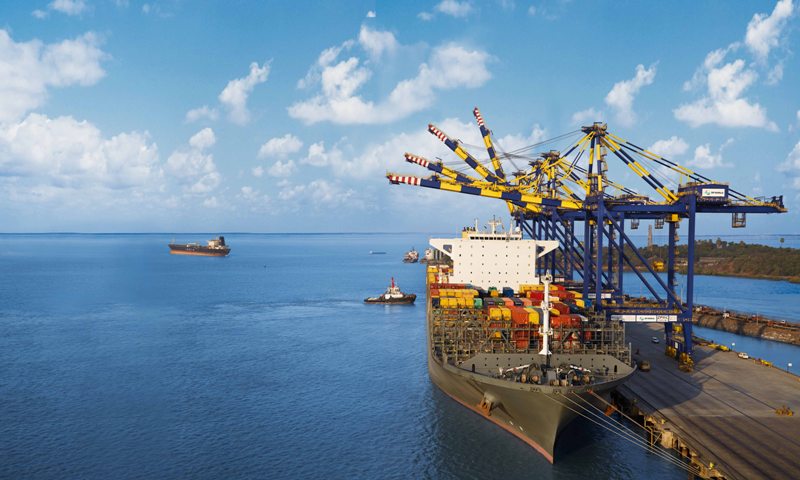
Despite having a 720-kilometre coastline and direct access to some of the world’s busiest shipping lanes, Maharashtra has historically underplayed its maritime potential. For decades, the state’s economic focus remained inland, centred on finance, manufacturing clusters, and urban services, while ports functioned largely as supporting utilities rather than strategic drivers of growth.
That approach is now undergoing a significant shift. As global trade patterns evolve and logistics efficiency becomes a key determinant of competitiveness, Maharashtra is repositioning ports and shipping at the core of its development strategy.
Ports Development Minister Narayan Rane has described the coastline as a critical economic resource that must be planned and utilised with intent. The state’s message is unambiguous: maritime assets are no longer incidental, but foundational to Maharashtra’s next phase of economic expansion.
India’s broader ambition to emerge as a global manufacturing and export hub has sharpened the policy focus on logistics. Modern ports increasingly influence industrial location decisions, supply-chain design, and investment flows. Maharashtra’s renewed emphasis on maritime infrastructure aligns with national initiatives such as Sagarmala, while retaining a distinct state-level focus on port-led industrialisation.
Under this approach, ports are envisaged not as cargo endpoints, but as gateways connecting global trade routes with the state’s economic hinterland. The proposed Vadhavan Port exemplifies this ambition. Planned as a deep-draft, high-capacity facility, it is expected to ease congestion at Mumbai’s existing ports and strengthen India’s transshipment capabilities on the western coast.
Beyond capacity expansion, the project reflects a governance shift. Modern ports, state officials argue, must be designed to serve industry by reducing turnaround times, lowering freight costs, and improving supply-chain reliability—benefits that extend well beyond coastal districts.
Building a maritime ecosystem
Maharashtra’s ports policy extends beyond cargo handling to encompass a broader maritime ecosystem. Plans include logistics parks, shipbuilding and repair facilities, fisheries infrastructure, and coastal tourism—elements that collectively form part of the state’s emerging blue economy framework.
For the Konkan region, port-led development holds the promise of long-awaited infrastructure investment and employment generation. Policymakers see maritime growth as a means to rebalance regional development, ease pressure on urban centres, and open new coastal growth corridors.
However, maritime expansion comes with challenges. Coastal zones are ecologically sensitive, and port projects often intersect with the livelihoods of fishing communities. Across the country, such developments have faced resistance over land acquisition, environmental impact, and compensation mechanisms.
The Maharashtra government has committed to consultations and safeguards, but officials acknowledge that stakeholder engagement must be continuous rather than procedural. Environmental clearances and community outreach, they note, are critical determinants of project viability, as delays from litigation or protests can erode both economic returns and public trust.
Execution will be decisive
From a governance perspective, ports policy operates at a complex institutional intersection involving state departments, central agencies, environmental regulators, and local authorities. Aligning these layers will test administrative capacity and coordination.
While political momentum can accelerate decisions, long-term success will depend on transparent processes, predictable timelines, and effective inter-agency coordination.
Shipping itself remains another under-utilised opportunity. Coastal shipping and inland waterways offer cost-effective and lower-emission alternatives to road transport, yet adoption remains limited. Experts note that unlocking this potential will require regulatory simplification, commercial incentives, and seamless integration with road and rail networks.
Between 2026 and 2035, Maharashtra’s maritime strategy could reshape the state’s economic geography by lowering logistics costs, decongesting cities, and creating new coastal growth hubs. As Minister Rane has emphasised, the challenge lies in balancing speed with sustainability.
Whether Maharashtra’s blue economy push delivers durable growth—or becomes a source of contested infrastructure—will ultimately depend on how effectively that balance is maintained.