
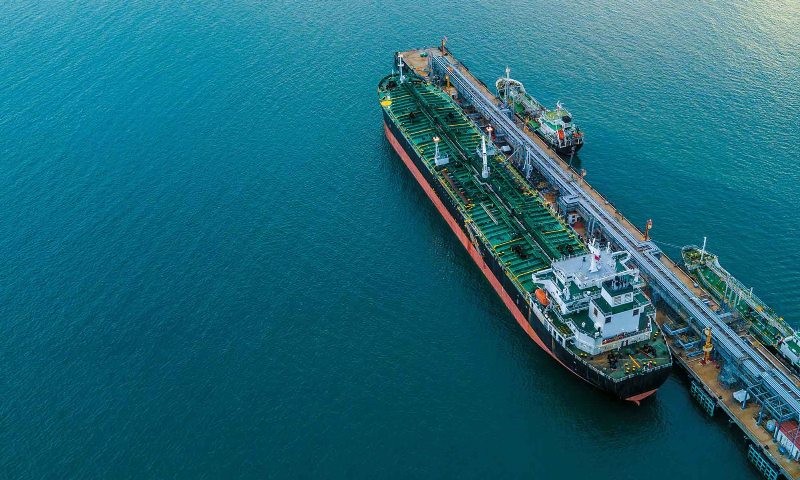
The Maritime Industry Authority (MARINA) gave domestic shipping operators an ultimatum to submit their ship-specific implementation plan (SIP) that limits the use of sulfur on fuel oil.
The 0.5% mass per mass (m/m) sulfur on fuel oil limit is mandatory in compliance with the International Maritime Organization’s (IMO) sulfur cap policy.
The final deadline for submission is on June 30, 2024. Failure to do so will be interpreted by the maritime authority as readiness to comply, according to MARINA Advisory (MA) No. 2024-19 dated April 25.
Ships already complying with the 0.5% m/m sulfur limit and below are exempt from the requirement provided that operators inform MARINA.
The issuance of the final notice comes as MARINA intends to implement the IMO sulfur cap policy, also known as IMO 2020, on domestic ships on January 1, 2025.
This is in compliance with IMO International Convention for the Prevention of Pollution from Ships (MARPOL Convention) Annex VI, which the Philippines ratified in 2018.
The regulation applies to all ships, whether on international voyages between two or more countries, or on domestic voyages solely within the waters of a party to the MARPOL Annex.
The policy has been enforced on foreign-flagged ships and Philippine-flagged vessels plying international trade since January 1, 2020, in compliance with the global implementation schedule.
For domestic ships, MARINA decided to implement the policy in January 2025 to help ease the cost impact on operators and give oil suppliers time to acquire their supplies of compliant fuels.
MARINA in 2020 issued Circular No. MS-2020-06, which requires all Philippine-registered ships plying the domestic trade and all newly-constructed shops and imported brand-new and secondhand vessels to comply with the global 0.50% m/m sulfur cap on marine fuel oil by January 1, 2025.
All domestic ships plying the domestic trade should also develop an SIP, which refers to the ship’s transition plan in preparation for the compliance with the use of low-sulfur fuel oil (LSFO).
MARINA in 2021 also reminded domestic ship owners to submit their SIPs to the maritime agency for verification and approval not later than January 1, 2022 but only a few complied .
Last March, MARINA administrator Sonia Malaluan said they don’t expect immediate compliance by all vessels of shipowners with a big fleet as this will entail huge costs and might disrupt operations in the domestic trade.
Under MC SR 2020-06, fuel oils to be used on board ships for propulsion or operation, including all gas, petrol, distillates, residual and blended fuels, should have a maximum sulfur content of 0.50% per m/m.
There are, however, exemptions from compliance, such as when a ship is acting to secure the safety of the ship or to save a life at sea, or obtains a fuel oil non-availability report because fuel was not available at the port of origin.
Also an exemption is when a ship fitted with an exhaust gas cleaning system (EGCS) experiences unintentional damage, resulting in emissions exceeding the sulfur limit.
When this happens, the ship is expected to take all reasonable steps to reduce emissions, including carrying out repair works or switching to compliant fuel.
A company or person that violates or contravenes MC SR 2020-06, particularly by using fuel oil with more than the prescribed sulfur content, stands to face an administrative fine of P3 million plus suspension of the Authority to Operate.