
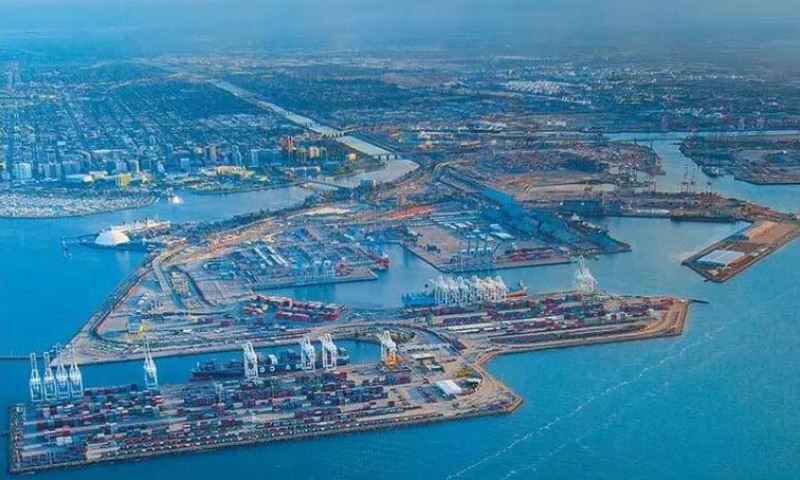
The Port of Long Beach has moved cargo ahead of its record-setting 2024 pace, driven largely by retailers accelerating shipments and stocking inventories before new tariffs took effect in the spring.
In a virtual briefing, Chief Executive Officer (CEO) Mario Cordero and Chief Operating Officer (COO) Noel Hacegaba said cargo operations remain smooth despite shifting trade policies and broader economic uncertainty.
Cordero noted that while consumers have so far been shielded from most tariff impacts, higher prices may emerge in early 2026 as more costs are passed along the supply chain.
Hacegaba added that even during the nation’s prolonged government shutdown, the port continues to operate efficiently through close coordination with industry partners.
Harbor Commission President Frank Colonna praised dockworkers and terminal operators for maintaining strong performance during the holiday shipping season.
In October, the port handled 839,671 TEUs, down 14.9 per cent from the same month in 2024, which remains the busiest in its 114-year history.
Imports fell 17.6 per cent to 401,915 TEUs, exports declined 11.5 per cent to 99,817 TEUs, and empty containers decreased 12.6 per cent to 337,940 TEUs.
Through the first ten months of 2025, the port has moved 8.23 million TEUs, up 4.1 per cent year on year (YoY).
Last month, the Port of Long Beach reported that since 2005, it had reduced diesel particulates by 90 per cent, nitrogen oxides by 68 per cent, and sulphur oxides by 98 per cent, according to its 2024 emissions inventory.