
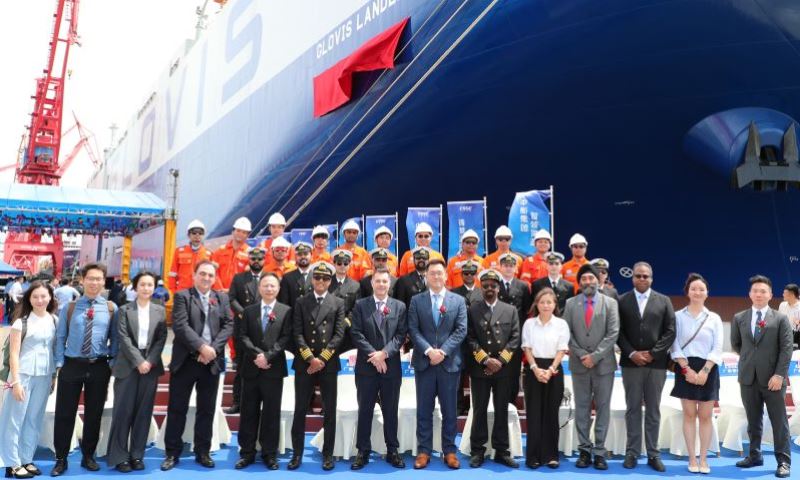
Seaspan Corporation has taken delivery of GLOVIS LANDER, its second 10,800 CEU LNG dual-fuel Pure Car and Truck Carrier (PCTC), marking another milestone in the company’s next-generation automotive logistics fleet.
The vessel follows the successful delivery of the first ship in the series in June, underscoring the rapid progress of Seaspan’s fleet expansion programme focused on sustainable and high-capacity vehicle transportation.
Measuring 230 metres in length and 40 metres in beam, GLOVIS LANDER is designed to transport up to 10,800 vehicles across 14 cargo decks, making it one of the largest and most advanced PCTCs in operation.
Powered by an LNG dual-fuel propulsion system equipped with Exhaust Gas Recirculation (EGR) and Selective Catalytic Reduction (SCR) technologies, the vessel complies with IMO Tier III emissions standards and is expected to reduce carbon emissions by approximately 24% compared with conventional-fuel car carriers.
The ship also incorporates advanced digital navigation and safety technologies, including Captain Eye AI for enhanced visual monitoring, a 360-degree panoramic surveillance system, ORCA-AI for collision avoidance and blind-spot detection, the HiNAS navigation system, and the R6 precision positioning system, enhancing navigational safety and operational efficiency.
To improve energy performance, GLOVIS LANDER is fitted with a 1,450 kW permanent magnet shaft generator capable of generating electricity while underway, alongside waste heat recovery and high-voltage shore power connectivity, reducing overall energy consumption and emissions during port stays.
The vessel has been delivered to Seaspan Corporation as part of the company’s strategy to support the growing demand for efficient, environmentally responsible automotive shipping while strengthening global vehicle logistics capabilities.
The delivery was also marked by the appointment of Captain Alsten Martin Dsouza, Chief Engineer Justin Xavier Chellan, and the Team Lander crew, who will take the vessel into service. The successful completion of the second delivery within a month highlights the coordinated efforts of the shipbuilding, technical, and operational teams involved in bringing the advanced carrier into operation.