
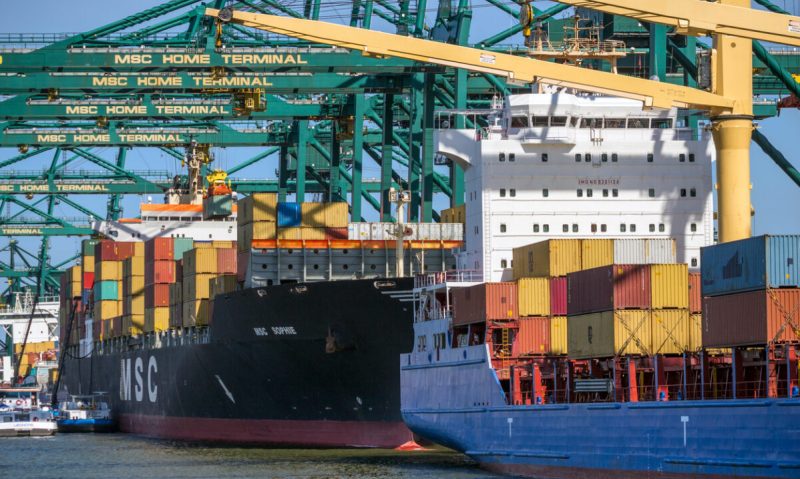
The Port of Antwerp-Bruges has marked a new milestone when the ultra-large container vessel MSC San Francisco arrived at CSP Zeebrugge with a record draft of 16.80 metres — the deepest ever recorded at the Belgian port.
This feat eclipses previous records set earlier in the year by MSC Olivia and MSC Mina, emphasising the port’s ongoing development in accommodating high-capacity ships.
Arriving from Colombo, Sri Lanka, MSC San Francisco is deployed on the LION service, which provides direct connections from the Far East to Europe with stops at Zeebrugge and Antwerp.
The vessel boasts a remarkable capacity of 16,196 TEU, a length of 366 metres, and a beam just over 51 metres, underscoring the size and scale of ships Zeebrugge can now routinely handle.
Officials have attributed this achievement both to recent infrastructure investments and to the collaborative work of all participants in the maritime supply chain. Years of focused upgrades to nautical infrastructure and safety systems at Zeebrugge have enabled the port to welcome some of the largest vessels in service today.
Marc Beerlandt, CEO of MSC Belgium, commented: “With the new draught record set by MSC SAN FRANCISCO in Zeebrugge, we are once again taking a powerful step forward for Belgium and our customers.
“This achievement confirms the appeal of our ports for the largest vessels and reinforces the reliability of the logistics chain. Once again, we are very proud of this milestone and would like to express our gratitude to the pilotage service, Maritime Services and Coast (MDK) and the Port of Antwerp-Bruges for their partnership in achieving this fantastic result.”
The arrival of MSC San Francisco is a clear indicator of Zeebrugge’s ambitions and maritime expertise, signalling to carriers and cargo owners that the port is thoroughly prepared for the ever-increasing requirements of global container shipping.
Zeebrugge’s growing capability mirrors broader industry trends. As detailed in our recent analysis of the world’s largest containerships, advances in vessel dimensions, green propulsion, and digital infrastructure are challenging ports to innovate and upgrade.