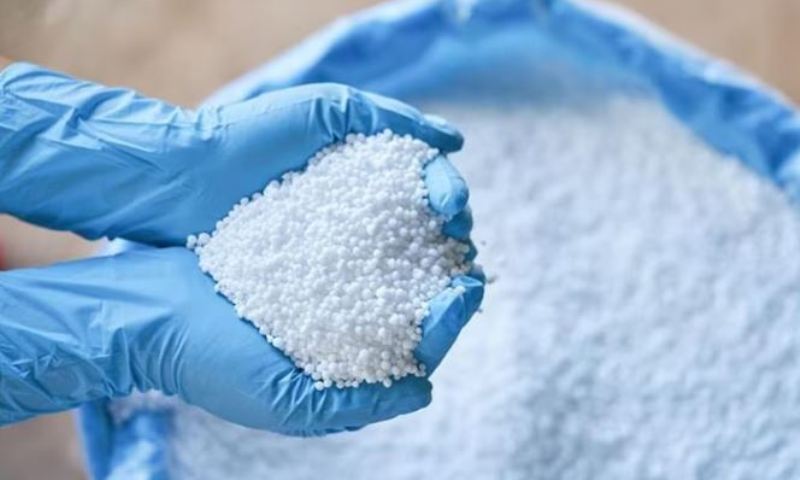
The Centre on Monday said India has sufficient fertiliser stocks to meet the requirements of the ongoing kharif sowing season and indicated that supplies are set to improve further with the easing of tensions in West Asia and the reopening of the Strait of Hormuz.
Addressing an inter-ministerial briefing on the West Asia crisis, Fertilisers Ministry Joint Secretary Bandana Preyashi said the country had an available stock of 196.65 lakh tonnes (lt) of various fertilisers as of June 14, providing a comfortable buffer against seasonal demand.
She noted that the resolution of the conflict in the region is expected to facilitate the movement of fertiliser cargoes that had been impacted by disruptions in maritime traffic through the strategically important Strait of Hormuz. According to the ministry, 12 ships carrying around 3.3 lakh tonnes of urea and 2.57 lakh tonnes of di-ammonium phosphate (DAP) are expected to head towards India once normal shipping operations resume through the waterway.
The government said these incoming consignments would further strengthen domestic availability of key fertilisers ahead of the peak agricultural season.
Preyashi stated that Indian fertiliser companies have contracted imports of about 50 lakh tonnes of fertilisers since March 1. Of this, 21.95 lakh tonnes of urea and 4.18 lakh tonnes of DAP have already arrived in the country.
For the current kharif season, fertiliser demand during the April-September period is estimated at 383.9 lakh tonnes. Against this requirement, the available stock position remains comfortable, the ministry said.
Fertiliser inventories have increased substantially over the past two-and-a-half months. Stocks stood at 155.19 lakh tonnes on April 1 and rose to 196.65 lakh tonnes by June 14, reflecting both domestic production and imports.
Official data also showed that sales of major fertilisers, including urea, DAP, muriate of potash (MoP), complex fertilisers and single super phosphate (SSP), totalled 70.57 lakh tonnes during April and May.
The assurance comes amid concerns over supply-chain disruptions caused by geopolitical tensions in West Asia, a region that plays a critical role in global energy and commodity trade. The reopening of the Strait of Hormuz is expected to ease logistical bottlenecks and support timely delivery of fertiliser shipments to India, helping ensure adequate supplies for farmers during the crucial sowing season.
Government officials reiterated that the current stock position and expected arrivals are sufficient to meet domestic demand and maintain supply stability across the country during the kharif cropping cycle.
