
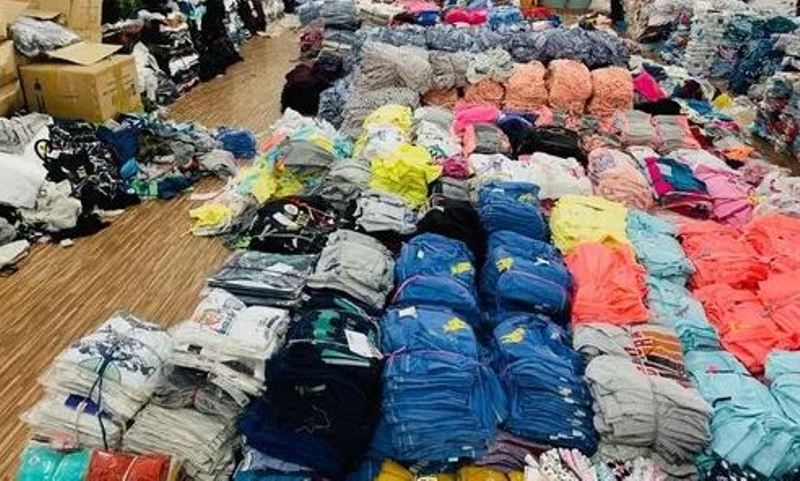
India, the 6th largest exporter of textiles and apparel in the world in 2023, continues to demonstrate its dominance in the global market.
In the fiscal year 2023-24, textiles and apparel (T&A), including handicrafts, accounted for 8.21 per cent of India’s total exports, reflecting the sector’s substantial contribution to the economy.
India holds a 3.9 per cent share of the global textile and apparel trade, with the USA and the EU as the primary export destinations, together comprising nearly 47 per cent of the country’s total textile and apparel exports.
The export of textiles and apparel, including handicrafts, saw notable growth during the first half of FY 2024-25. From April to October 2024, total exports reached USD 21.36 billion, a 7 per cent increase from the same period in FY 2023-24.
Among the key commodities, ready-made garments (RMG) led the pack, with a 41 per cent share of total exports at USD 8.73 billion. Cotton textiles and man-made textiles followed closely, contributing 33 per cent and 15 per cent, respectively, to total exports.
Despite the overall growth, the textile and apparel sector faced challenges due to geopolitical factors, including crises in regions like the Red Sea and Bangladesh. These factors caused a temporary slowdown in exports during the early months of 2024, particularly in January, February, and March.
In terms of imports, India’s textile and apparel imports during April-October 2024 totalled USD 5.43 billion, a slight decline of 1 per cent compared to the previous year.
Notably, imports of man-made textiles saw a significant drop of 13 per cent, while cotton textiles imports increased by 13 per cent, driven by the need for long staple cotton fibers.
India’s textile sector not only plays a pivotal role in the global market but also reflects the country’s ongoing efforts to enhance production capacity and reduce dependency on imports, especially in key areas like cotton and man-made textiles.
With rising global demand and a growing domestic consumption base, India remains a major player in the global textile trade, poised for continued success.