
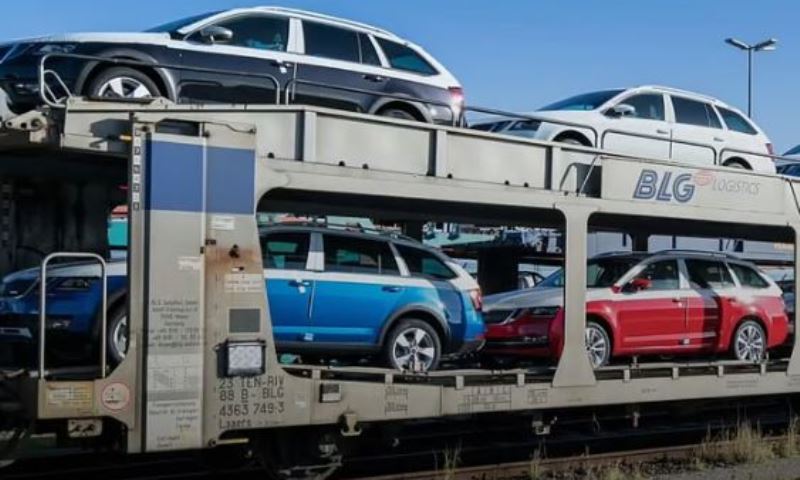
India’s pioneering Roll-on/Roll-off (Ro-Ro) train service, designed to transport passenger vehicles between Maharashtra and Goa, has witnessed a lukewarm response since bookings opened last week. Despite the buzz around the launch, only one vehicle has been booked so far for the inaugural journey scheduled on August 23 from Kolad to Verna, raising the possibility of cancellation due to insufficient interest.
Operated by Konkan Railway, the service was introduced as a convenient, non-stop option for travelers heading to Goa, especially ahead of the busy Ganesh Chaturthi season. The Ro-Ro train can carry up to 40 cars in one trip, but railway officials have clarified that a minimum of 16 vehicles is required to run the service. If bookings fall short, the trip will be scrapped and registration fees refunded.
Over the past week, Konkan Railway has received just 38 inquiries regarding the new offering, most of them expressing concerns about the lack of intermediate halts at key stations like Ratnagiri and Sawantwadi. Since these stations lack loading and unloading infrastructure, the train is scheduled to operate non-stop, something that has discouraged many potential users traveling to their hometowns for Ganpati celebrations.
The Ro-Ro is set to run on alternate days in both directions until September 11. Bookings will close on August 13 for the first round of trips departing August 23 from Kolad and August 24 from Verna.
Despite the service’s novelty, many passengers see little advantage. Akshay Mahapadi, Secretary of the Akhand Konkan Railway Pravasi Seva Samiti, highlighted that the 12-hour rail journey, coupled with an additional three hours needed for check-in and vehicle loading, offers no time savings compared to the 10-12 hours typically spent driving. Moreover, the cost, ₹7,875 per vehicle plus individual passenger fares, makes it an unaffordable option for most families.
He suggests that a better launch window would have been during the New Year season in December when demand is higher and traffic congestion is heavier.
Adding to the concern, several passenger associations argue that the Ro-Ro service consumes valuable train paths and resources that could otherwise support the large number of Ganpati special trains. Central Railway has already announced 250 special trains, while Western Railway plans to run 44. Running the Ro-Ro requires a full crew and track allocation on the heavily burdened Konkan Railway route, resources that could instead help accommodate the festival rush.
While the Ro-Ro initiative is being seen as a bold and innovative step towards easing long-distance holiday travel, its timing, pricing, and lack of key halts may prove to be roadblocks unless addressed quickly.