
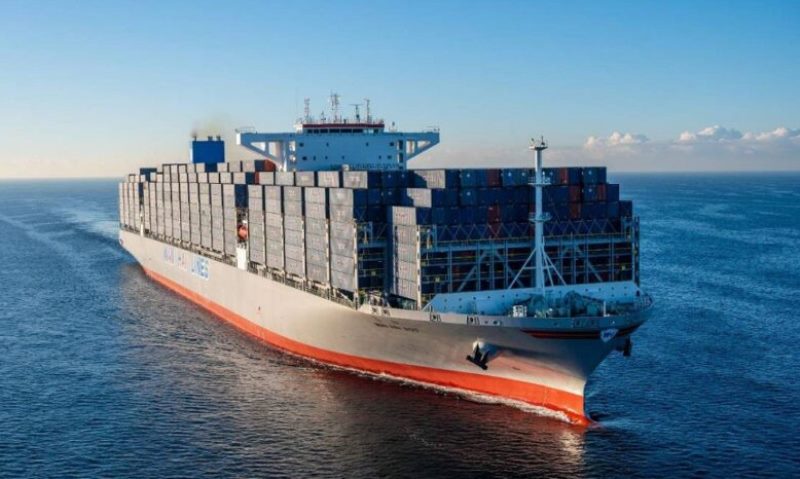
Taiwanese container carrier Wan Hai Lines has returned to the newbuilding market with an order for six 6,000 TEU dual-fuel LNG-powered container vessels, reinforcing its strategy to expand and modernise its owned fleet.
In a filing to the Taiwan Stock Exchange, the Taipei-headquartered line said the vessels will be constructed at CSSC Huangpu Wenchong Shipbuilding in China. The contract price ranges between $75.2 million and $82 million per vessel, placing the total value of the order at approximately $451.2 million to $492 million.
Scheduled for delivery by 2030, the newbuildings will increase Wan Hai’s owned fleet to around 150 vessels. The company, ranked 11th globally by container capacity according to Alphaliner, noted that the contract price includes upgraded onboard equipment. The ships will be LNG dual-fuel capable and are intended primarily for regional and intra-Asia trades.
The latest order adds to Wan Hai’s substantial orderbook, which already exceeds 30 vessels. This includes an 8,000 TEU series under construction at Taiwan’s CSBC Corporation , as well as a batch of 16,000 TEU ships being built at South Korean yards HD Hyundai Samho and Samsung Heavy Industries.
Notably, the larger vessels were originally ordered as methanol-ready units but were later converted to LNG propulsion, highlighting Wan Hai’s growing preference for gas-fuelled tonnage as it advances its decarbonisation and fleet renewal objectives.