
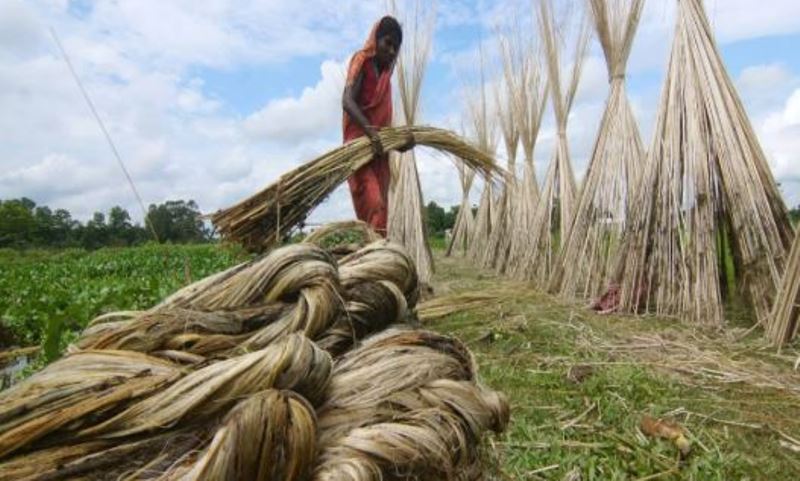
India’s jute industry is urging the Centre to restrict the import of jute seeds from Bangladesh after Dhaka moved to curb exports of raw jute and jute products to the Indian market, triggering concerns over supply stability and trade reciprocity.
Industry executives said Bangladesh’s recent measures—aimed at protecting domestic availability and supporting local processors—have disrupted the flow of raw jute to India, which depends on imports to bridge seasonal shortages. In response, Indian jute mills have sought a ban or tighter controls on jute seed shipments from Bangladesh, arguing that unrestricted seed exports undermine India’s efforts to boost domestic cultivation.
According to mill associations, Bangladesh accounts for a significant share of jute seed supplies used by Indian farmers. “When raw jute exports are restricted, continuing seed exports creates an uneven trade dynamic,” said a senior industry official, adding that domestic seed development must be prioritised to reduce long-term dependence.
The industry has also flagged the risk of price volatility and supply uncertainty ahead of the peak procurement season. Mills fear that tighter jute availability could raise input costs and impact the production of sacking bags mandated for foodgrain packaging under the Jute Packaging Materials (JPM) Act.
Government officials said the matter is under review, noting that any decision would need to balance farmer interests, mill viability and bilateral trade commitments. India has, in recent years, stepped up efforts to improve jute seed quality through public research institutions, but scaling up domestic production remains a challenge.
Trade analysts cautioned that retaliatory restrictions could escalate into a broader trade dispute, given the interlinked nature of the jute value chain between the two neighbours. However, millers maintain that policy parity is essential to ensure a level playing field and safeguard India’s jute ecosystem.
For now, the industry is seeking swift consultations between New Delhi and Dhaka to address export curbs, ensure predictable supplies and avoid disruptions to one of the region’s oldest agro-based industries.