
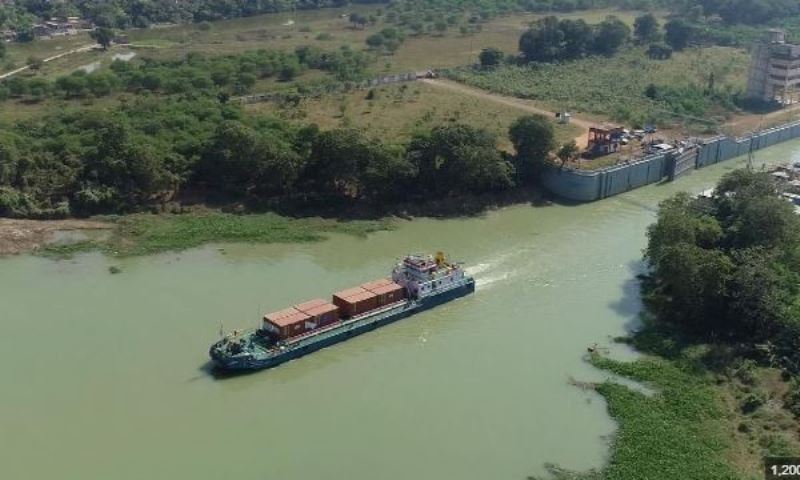
Maharashtra is set to strengthen its inland water transport (IWT) network, with the Union Ministry of Ports, Shipping and Waterways identifying seven national waterways in the state as suitable for development. Together, these waterways provide a navigable stretch of approximately 662.97 km, marking a significant step toward expanding riverine transportation in the region.
The waterways cleared for development include: NW-4: Godavari River, NW-11: Arunavati–Aran system, NW-28: Dabhol Creek–Vashishti River, NW-53: Kalyan–Thane–Mumbai waterway (covering Vasai Creek and the Ulhas River), NW-85: Revadanda Creek–Kundalika River, NW-100: Tapi River, NW-109: Wainganga–Pranahita river system
Maharashtra already plays a pivotal role in India’s inland water transport sector. During 2024–25, six waterways in the state—NW-10 (Amba River), NW-53, NW-83 (Rajpuri Creek), NW-85, NW-89 (Savitri River–Bankot Creek) and NW-91 (Shastri River–Jaigad Creek)—accounted for roughly 45.35% of the country’s total IWT cargo movement, underscoring the state’s strategic importance.
The Inland Waterways Authority of India (IWAI) will support cargo operators to promote the movement of both goods and passengers through these waterways. While IWAI is responsible for developing and regulating national waterways, activities related to economic development and industrialisation along riverbanks will remain under the state government’s jurisdiction.
The initiative aligns with the Maharashtra Logistics Policy 2024, which seeks to enhance coastal and riverine logistics and promote port-led industrial growth. Key focus areas include the development of integrated logistics hubs, improved coastal and hinterland connectivity, and upgrades to port and waterway infrastructure—particularly in coastal districts such as Raigad, Ratnagiri, and Sindhudurg. These measures are expected to improve cargo efficiency, reduce logistics costs, and foster balanced regional economic development.