
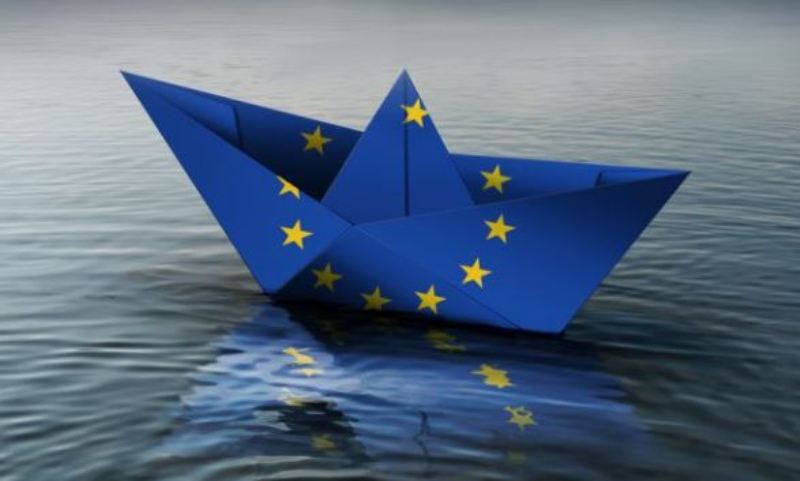
The free trade agreement (FTA) between India and the European Union, finalised this week after nearly two decades of negotiations, is expected to trigger a structural shift in global maritime trade, significantly strengthening the India–Europe shipping corridor at a time of heightened geopolitical disruption across traditional routes.
Covering a combined market of nearly two billion people and accounting for roughly 25 per cent of global GDP, the agreement will eliminate or reduce tariffs on 97 per cent of European exports to India and more than 99 per cent of Indian exports to the EU. For the maritime sector, this is projected to translate into a sustained increase in containerised cargo, breakbulk movements and automotive shipments between the two regions—lanes that have historically operated below potential due to tariff and regulatory barriers.
Container Volumes and Network Reconfiguration
Container shipping is expected to see the most immediate impact. With tariff savings on EU exports alone estimated at approximately $4.75 billion annually, the commercial rationale for direct cargo flows between India and Europe strengthens considerably.
Indian west coast ports such as Jawaharlal Nehru Port Authority (JNPA), Mundra and Pipavav are positioned to benefit from increased Europe-bound traffic, while European gateways including Rotterdam, Antwerp, Hamburg, Piraeus and Valencia are expected to capture higher inbound volumes.
Shipping lines are already evaluating service design implications. The agreement creates conditions for new direct deep-sea services between India and northern Europe, potentially reducing reliance on transshipment hubs such as Singapore and Colombo. Carriers may also reconfigure existing Asia–Europe loops by increasing Indian port calls while reducing exposure to Chinese rotations, reflecting Europe’s broader sourcing diversification strategy.
Breakbulk, Ro-Ro and Project Cargo Upside
Beyond containers, tariff liberalisation in machinery, industrial equipment and engineering goods is expected to boost breakbulk and project cargo movements. Automotive trade liberalisation is likely to support higher demand for ro-ro vessels and specialised heavy-lift tonnage. Secondary effects may also be felt in bulk shipping as changes in manufacturing locations alter flows of raw materials and semi-finished goods.
Strategic Realignment of Trade Flows
The agreement carries significant strategic implications. European policymakers have explicitly prioritised reducing dependence on Chinese manufacturing, positioning India as a key alternative production base. For shipping lines, this signals a gradual rebalancing of Asia–Europe trade patterns, with vessel deployment strategies increasingly aligned to India-centric supply chains.
India’s role as both a manufacturing hub and a logistics gateway is expected to expand further, particularly as port capacity, hinterland connectivity and free trade zone infrastructure continue to improve. Ports offering integrated logistics, warehousing and digital customs solutions are best placed to capture evolving cargo flows.
Phased Impact and Market Dynamics
While the agreement has been finalised, implementation will depend on ratification and phased tariff reductions spread over several years. Maritime analysts expect the most pronounced impact from the latter half of the 2020s, as companies restructure supply chains around the new trade framework.
More predictable trade volumes could support improved vessel utilisation and stable service patterns. Over the medium term, this may exert downward pressure on freight rates as capacity aligns more closely with demand, benefiting shippers through lower transport costs and improved schedule reliability. For carriers, this will need to be balanced against rising fuel costs and tightening environmental compliance requirements.
Geopolitical Context and Route Risks
The FTA comes amid sustained disruption on key maritime routes. Security risks in the Red Sea have forced widespread rerouting via the Cape of Good Hope, extending voyage times and absorbing global capacity. A normalisation of Suez Canal transits would amplify the benefits of the India–EU corridor, while prolonged instability could delay network optimisation.
The agreement also forms part of a wider trade realignment, with India pursuing parallel negotiations with the UK and EFTA countries. For shipping lines, this reinforces the need for flexible fleet deployment across multiple corridors rather than dependence on a single dominant trade lane.
Long-Term Outlook
While sensitive agricultural sectors remain partially excluded and implementation risks persist, the strategic direction is clear. Both India and the EU have committed to deeper economic integration, with maritime transport positioned as a central enabler.
Carriers with established India exposure, efficient ports with integrated logistics capabilities, and freight forwarders offering end-to-end supply chain solutions are expected to emerge as key beneficiaries. Conversely, operators slow to adapt or over-exposed to declining routes may face competitive pressure.
As the agreement moves through ratification, its full impact on global shipping will unfold gradually. However, industry consensus suggests the India–Europe maritime corridor is set to become one of the defining trade routes of the next decade, reshaping global shipping geography and reinforcing the growing influence of geopolitics on maritime trade.