
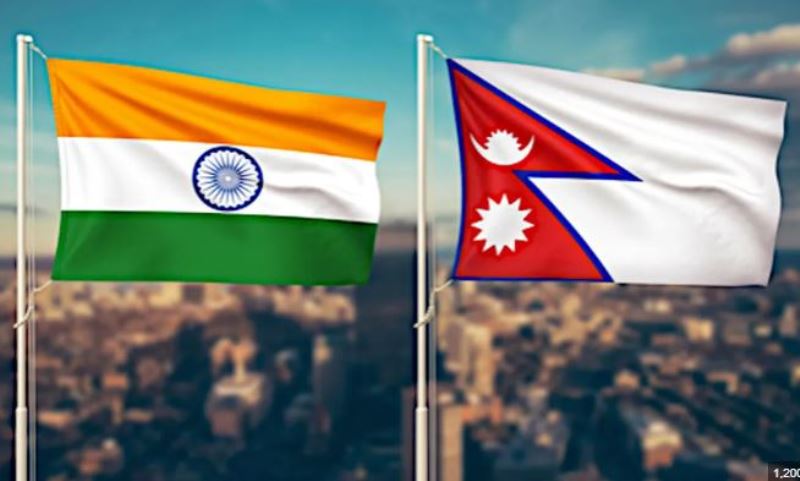
President of the Federation of Nepalese Chambers of Commerce and Industry (FNCCI), Chandra Prasad Dhakal, has called for deeper economic integration between India and Nepal, urging both countries to streamline customs procedures, align standards and strengthen digital trade systems to boost bilateral commerce.
Addressing the 2nd Indo-Nepal Trade Festival 2026 in New Delhi on Friday, Dhakal stressed the need to create an enabling environment for micro, small and medium enterprises (MSMEs) on both sides. He said MSMEs require easier access to finance, technology transfer and reliable market information to fully tap cross-border opportunities.
“People-to-people ties remain our biggest strength. Cinema, culture, education exchanges and tourism build understanding beyond official meetings,” Dhakal said, adding that stronger interaction between entrepreneurs, youth and artists would further solidify the foundation of economic cooperation.
Highlighting Nepal’s strategic position, Dhakal said the country can serve as a gateway between India and China, offering significant advantages for trade and connectivity. He noted that Nepal is building a pipeline of bankable projects and long-term partnerships, with a commitment to policy consistency, investor confidence and continuity.
The FNCCI has been advocating predictable policies, responsible fiscal management and private sector-led growth, he said. Emphasising the strength of bilateral ties, Dhakal noted that India remains Nepal’s largest trade partner and one of its biggest sources of investment. The open border, cultural closeness and deep family connections make the partnership unique globally, he added.
“At a time when the global economy is facing uncertainty, supply chain disruptions and regional tensions, it is even more important that neighbours work closely and support each other’s growth,” Dhakal said.
Referring to India’s recent Union Budget, which focuses on infrastructure, manufacturing, digital connectivity, green energy and MSME support, he said continued investments in railways, highways, logistics parks and digital public infrastructure will not only strengthen India’s economy but also generate opportunities for neighbouring countries like Nepal.
Dhakal also outlined Nepal’s reform agenda, stating that the country is prioritising economic reforms, infrastructure development and improvements in the investment climate. He highlighted Nepal’s potential in hydropower, tourism, agriculture, information technology, manufacturing and services.
Investment prospects in Nepal are expanding, he said, with simplified procedures across multiple sectors and efforts underway to reduce bureaucratic bottlenecks. Opportunities are emerging in industrial parks, special economic zones, cross-border logistics, agro-processing, pharmaceuticals, education and healthcare services.
Describing the Indo-Nepal Trade Festival as more than just an event, Dhakal said it serves as a platform to convert goodwill into business deals, ideas into projects and conversations into long-term partnerships.