
The escalating conflict in the Middle East has begun to severely disrupt Kerala’s export trade, forcing exporters to offload premium farm produce in local markets at drastically reduced prices as shipping and air cargo routes to the Gulf remain suspended.
Residents visiting the Tirur market in Malappuram district on Wednesday witnessed an unusual sight: export-quality bananas, cucumbers, pumpkins, tubers and one-kilogram ginger packets being sold from trucks parked by the roadside at throwaway prices. As buyers bargained, prices dropped even further.
The distress sale reflects the mounting pressure on exporters following disruptions in cargo movement to Gulf Cooperation Council (GCC) countries after Iran launched retaliatory strikes on US bases in the region, prompting heightened security concerns and operational suspensions by major shipping companies.
Shipping suspensions disrupt trade
Kerala exporters say they have received multiple advisories from international shipping lines announcing precautionary shutdowns.
Thai container shipping company RCL informed exporters on March 2 that it had decided to immediately suspend all fresh bookings to and from the Gulf and Red Sea regions due to the escalating security situation and the closure of the Strait of Hormuz.
Other major global carriers, including Ocean Network Express (ONE) and Mediterranean Shipping Company (MSC), also announced similar suspensions, halting cargo movements to countries such as the UAE, Saudi Arabia, Qatar, Oman, Kuwait, Iraq, Jordan and Egypt.
Munshid Ali, secretary of the Kerala Exporters Forum (KEF) and owner of Ceekay Global Trading, said feeder vessel services from Kochi have already been halted.
“All feeder lines have suspended operations from Kochi seaport. We have received trade advisories from logistics companies such as RCL, ONE, Unifeeder, Evergreen and DP World,” he said.
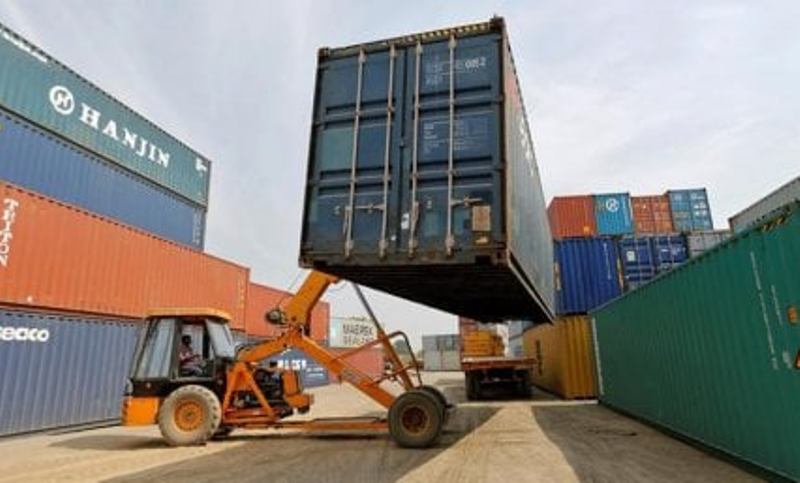
Kerala’s external trade is largely routed through Cochin Port, and exporters say container movements have come to a standstill.
Containers already packed for export are now being turned back instead of being directed to container freight stations where they would normally be weighed and readied for shipment.
“Authorities at major logistics operators such as Kerala State Industrial Enterprises and Gateway Distriparks Kerala have advised exporters to temporarily stop shipments,” Ali added.
Air cargo also affected
Air cargo routes have also been disrupted. On March 4, Qatar Airways announced that its flight operations would remain temporarily suspended due to the closure of Qatari airspace.
The shutdown has hit exporters of highly perishable goods the hardest.
Vegetables such as lady’s finger, bitter gourd and curry leaves are usually shipped by air, while other perishables including bananas, banana leaves, tapioca and pineapples are transported in refrigerated containers to the Gulf.
With cargo operations halted, these products are now piling up at ports and airports.
“Once the product is off-loaded from export containers, its premium value is lost. We have to sell it at whatever price the market offers,” said Abdurahiman of Marvel Exports.
Exporters say they are forced to sell the produce quickly in local markets to avoid total losses.
“It’s a race against time. If we don’t sell these items locally, both exporters and farmers who supplied them will suffer complete losses,” said Habib Rahman of NAQD EXIM Consulting.
Uncertainty over shipments already at sea
Exporters are also concerned about consignments that had already left Kerala before the crisis escalated.
Ali said a container ship, Zhong Gu Tai Yuan, with a capacity of 5,000 TEUs and carrying over 100 refrigerated containers, departed Kochi recently, but its current status remains uncertain.
“With the port of Jebel Ali closed, there is a possibility that the vessel could return without unloading its cargo,” he said.
Containers that have already reached Gulf ports are also facing delays. Even with refrigeration, products like bananas can remain fresh for only 10–15 days.
“After that, even distress selling becomes impossible,” Rahman said.
Longer routes raise concerns
Beyond Gulf exports, the conflict is also creating challenges for shipments to other global markets.
Kerala exports a wide range of products, including marine products, coffee, tea, cardamom and cashew, primarily to the United States, China, the European Union, Japan and Vietnam.
Dr K N Raghavan, chairman of the Marine Products Export Development Authority (MPEDA), said the full impact on exports is yet to be assessed, but shipping disruptions are already causing concern.
Due to security threats in the Red Sea region, vessels heading to Europe and the United States are increasingly avoiding the traditional route through the Bab el-Mandeb Strait and the Suez Canal.
Instead, many ships are sailing around the Cape of Good Hope in South Africa, adding nearly two weeks to the journey.
The longer routes are expected to push up freight rates and insurance costs, further squeezing exporters’ margins at a time when many are already facing heavy losses due to disrupted trade routes.