
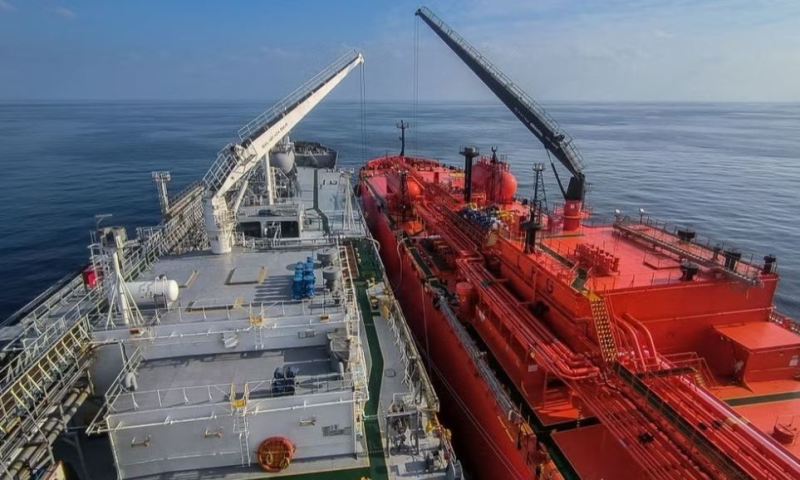
Leading Japanese firms — Sumitomo Corporation, K Line and NYK Line — have joined forces to develop an ammonia bunkering vessel, marking a significant step toward advancing alternative marine fuels and decarbonizing the shipping industry.
The collaboration aims to design and deploy a vessel capable of safely supplying ammonia as fuel to ships, supporting the transition away from conventional fossil fuels. Ammonia is increasingly being explored as a zero-carbon fuel option, as it does not emit carbon dioxide when burned, making it a promising candidate for sustainable maritime operations.
Under the partnership, each company will contribute its expertise across shipping operations, fuel supply chains, and project development. K Line and NYK Line bring extensive experience in vessel operations and maritime logistics, while Sumitomo Corporation will play a key role in fuel sourcing, infrastructure, and commercial structuring.
The initiative is part of broader efforts by Japan’s maritime and industrial sectors to build a robust ecosystem for next-generation fuels. Developing bunkering infrastructure is seen as critical to enabling the widespread adoption of ammonia-powered vessels, which are currently in various stages of design and testing.
Industry observers note that one of the key challenges in scaling ammonia as a marine fuel lies in ensuring safe handling and storage, given its toxic nature. The proposed bunkering vessel will incorporate advanced safety systems and operational protocols to address these concerns.
The project also aligns with global decarbonization goals set by the International Maritime Organization, which is pushing for significant reductions in greenhouse gas emissions from shipping over the coming decades.
While timelines and deployment locations have yet to be fully disclosed, the partnership signals growing momentum behind ammonia as a viable alternative fuel. If successful, the project could pave the way for similar initiatives worldwide, accelerating the shipping industry’s transition toward cleaner energy solutions.