
In the arid stretches around Deendayal Port Authority in Gujarat, an invasive shrub long regarded as a nuisance is being transformed into a clean energy resource. Prosopis juliflora — locally known as gando bawal — is now at the centre of a pioneering bio-methanol project aimed at converting waste biomass into low-carbon fuel.
The initiative, developed under the Harit Sagar Guidelines and Maritime India Vision 2030, marks a significant step toward India’s port-led decarbonisation goals.
Pilot project takes shape
Currently in the engineering phase, the pilot plant is expected to be commissioned by March 2027 at an estimated cost of ₹100 crore. Designed as a technology demonstration unit, the project will convert 15–20 tonnes of biomass daily into around 5 tonnes of methanol.
“This is a biomass-to-methanol project,” said Ankur Jain. “We are handling biomass-to-syngas conversion, while Thermax Ltd is responsible for syngas-to-methanol synthesis.”
The primary feedstock will be Prosopis juliflora, sourced locally with community participation, creating an additional income stream while tackling an ecological problem.
Turning waste into fuel
The process involves gasifying biomass at high temperatures (700–1,000°C) in a low-oxygen environment to produce syngas — a mixture of carbon monoxide and hydrogen. This gas is then cleaned, conditioned and converted into methanol using a copper-based catalyst under controlled temperature and pressure.
The resulting liquid methanol is refined to fuel-grade quality and can be used for industrial applications or as a marine fuel. The system is flexible enough to process other biomass such as agricultural residues, including peanut shells and sawdust.
From a cost perspective, bio-methanol is expected to be cheaper than e-methanol but more expensive than conventional fossil-based methanol, with costs likely to fall as the technology scales.
Driving greener port operations
For Deendayal Port Authority, the project is as much about innovation as it is about sustainability. The produced methanol is expected to be blended with conventional fuels to power harbour tugs and other service vessels.
The initiative reflects a circular economy model — removing invasive biomass, generating local livelihoods, and producing cleaner fuel while contributing to emissions reduction and carbon sequestration.
Building a methanol hub
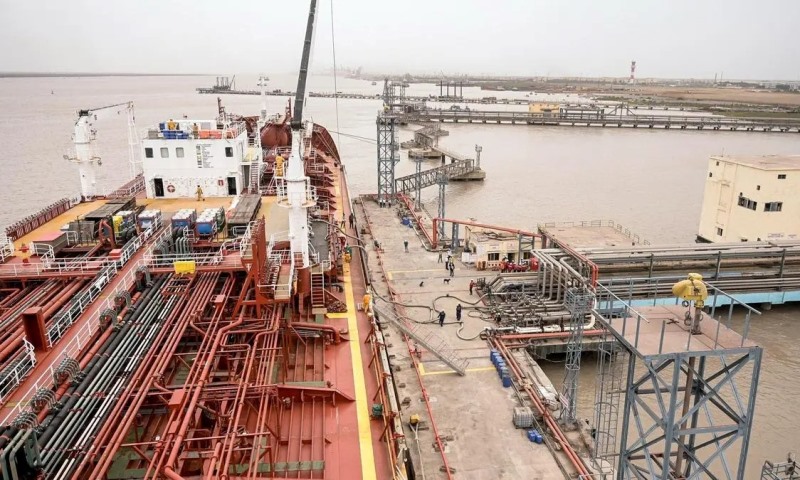
The bio-methanol project is part of a broader strategy to position Kandla as a major bunkering hub for low-carbon fuels. The port is also exploring a ₹3,500 crore e-methanol project with a planned capacity of 1.5–2 lakh tonnes per annum.
Strategically located along the busy shipping corridor between Port of Rotterdam and Port of Singapore, the port aims to cater to nearly 200 methanol-fuelled vessels by 2030.
In a key milestone, Deendayal Port Authority successfully conducted its first shore-to-ship methanol bunkering trial on April 2. The exercise involved major industry players such as Stolt Tankers, JM Baxi, Aegis Vopak and Indian Oil Corporation Ltd, with technical validation by DNV.
Building on this success, the port is now preparing for ship-to-ship bunkering operations and plans to secure up to 500 KTPA of green e-methanol supply by 2028–29.
A model for sustainable transformation
By converting an invasive species into a valuable clean fuel, the Kandla initiative showcases how local environmental challenges can be turned into scalable sustainability solutions. As global shipping accelerates its transition to low-carbon fuels, projects like this could play a critical role in reshaping the maritime energy landscape.