
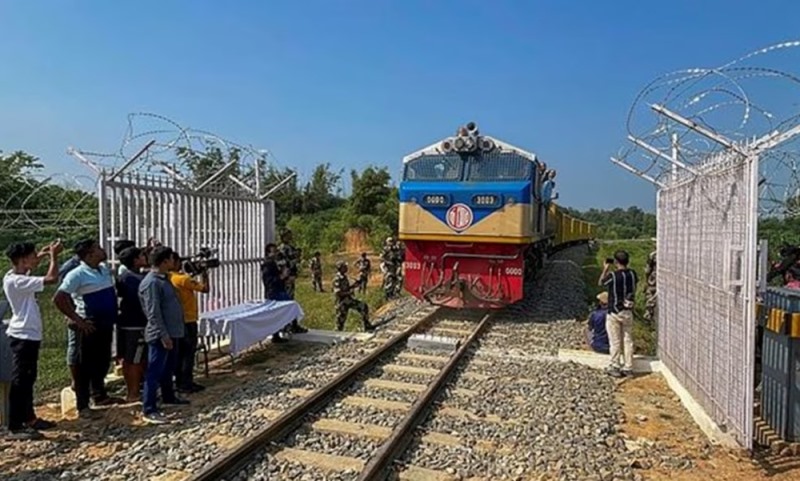
Cargo services on the Tripura–Akhaura rail link have gained significant momentum following the steady rise in cross-border freight movement between India and Bangladesh. Officials confirmed that the railway corridor connecting Agartala in Tripura with Akhaura in Bangladesh is improving cargo transportation efficiency, lowering logistics costs, and strengthening regional trade integration across Northeast India.
Authorities stated that freight operations have expanded steadily since the rail connectivity project became operational, enabling faster movement of goods between northeastern India and Bangladesh. The corridor has also reduced dependence on longer overland transport routes through the Siliguri Corridor, offering businesses shorter and more efficient trade access to Bangladeshi logistics networks and seaports.
According to officials from the Northeast Frontier Railway, the rail link marks a major milestone in regional cargo connectivity and logistics modernization. They added that freight volumes are expected to increase further as operational capacity expands and additional cargo-handling infrastructure is developed.
The railway connection is expected to support transportation of agricultural products, industrial goods, construction materials, and other commercial cargo across the region. Businesses in Tripura may now gain improved access to international export markets through Bangladesh’s transportation and port network, reducing delivery times and operational expenses.
Trade and logistics experts noted that the project could reshape cargo movement patterns across Northeast India by encouraging investment in warehousing, freight terminals, and export-oriented industries. Several business organizations welcomed the improved railway connectivity, highlighting that previous transportation delays and lengthy road routes increased logistics costs for traders and manufacturers.
Authorities also confirmed that modernization work continues at customs checkpoints and cargo-handling facilities along the corridor. Upgraded signaling systems, reinforced tracks, digital cargo tracking mechanisms, and integrated security monitoring infrastructure are being introduced to improve operational coordination between Indian and Bangladeshi railway agencies.
Officials emphasized that the Tripura–Akhaura rail project aligns with India’s broader Act East policy and long-term northeastern infrastructure development strategy. The corridor is also expected to strengthen supply chain resilience by providing alternative freight transportation routes through Bangladesh during emergencies or disruptions elsewhere.
Transportation planners believe the railway link could generate wider economic benefits beyond cargo movement, including growth in tourism, hospitality, and logistics-related employment around Agartala and surrounding districts. Meanwhile, regional authorities continue reviewing proposals for expanded freight services, integrated customs processing systems, and future passenger operations along the corridor.
The Tripura–Akhaura rail link is increasingly emerging as a strategic cargo gateway for Northeast India, with officials expecting the project to improve logistics efficiency, expand cross-border trade, and support long-term regional economic growth.